

Inbound Marketing Automation
Automatically segment and score leads applying ICP and account insights combined with real-time intent, behavioral, and firmographic signals.
Challenges in Inbound Lead Management

Challenges
- Slow Lead Qualification. Manual lead qualification delays responses and leads to missed opportunities.
- Inconsistent Segmentation. Poor segmentation lowers campaign effectiveness and wastes ad spend.
- Inefficient Follow-up. Slow or generic follow-up reduces conversions and prolongs sales cycles.
- Limited Data Integration. Fragmented lead data leads to incomplete profiles and poor prioritization.
- Lack of Real-Time Insights. Delayed insights cause missed timing for lead engagement and conversion.

Solutions
- Automated Lead Scoring. Automatically score leads using firmographic and behavioral data to qualify them instantly.
- Dynamic Lead Segmentation. Segment leads into clear categories based on predictive scoring to enable targeted engagement.
- Workflow Context. Aggregate account and buyer signals to trigger workflows with robust context.
- Unified Lead Data. Collect data from multiple internal and external sources to build a complete lead profile.
- Real-Time Intent Signals. Track visits, content engagement, and intent signals to prioritize leads as they show interest.
How to Make Inbound Marketing Precise, Fast, and Integrated
HG Insights eliminates manual lead qualification and segments inbound leads with predictive scores. Real-time intent signals and firmographic data streamline routing and nurturing, enabling faster and more effective sales and marketing actions.
Real-Time Predictive Scoring
Automated Segmentation
Lead Routing Automation
Unified Data View
CRM and Marketing Integration
How NiCE Drives Channel Success with HG
NiCE integrates partner-provided criteria into HG’s robust predictive model to generate precise, prioritized target account lists taking advantage of scoring that reflects intent signals, historical usage, and relevant technologies. With a clear ICP and detailed criteria, we get fantastic results.
Amanda Mock | Senior Channel Marketing Manager, NiCE
How HiBob Uses HG To Improve Their Entire Go-To-Market
“The quantity and quality of the HG Insights data was viewed as more comprehensive and more reliable.”
Will Vasquez Global Director | Account-Based GTM Strategies, HiBob
How HG Insights Empowers Informatica To Be More Effective and Efficient
“We have all the usual suspects in terms of data providers, but HG is my favorite. It has a very actionable approach to being able to leverage the data.”
Gigi Gazelle Urquico | Senior Director, Revenue Enablement, Informatica
What Are the Key Steps for Effective Inbound Marketing Automation?
Collect and unify inbound lead data, score with AI models, segment leads by priority, and automate routing to optimize lead engagement and conversion.
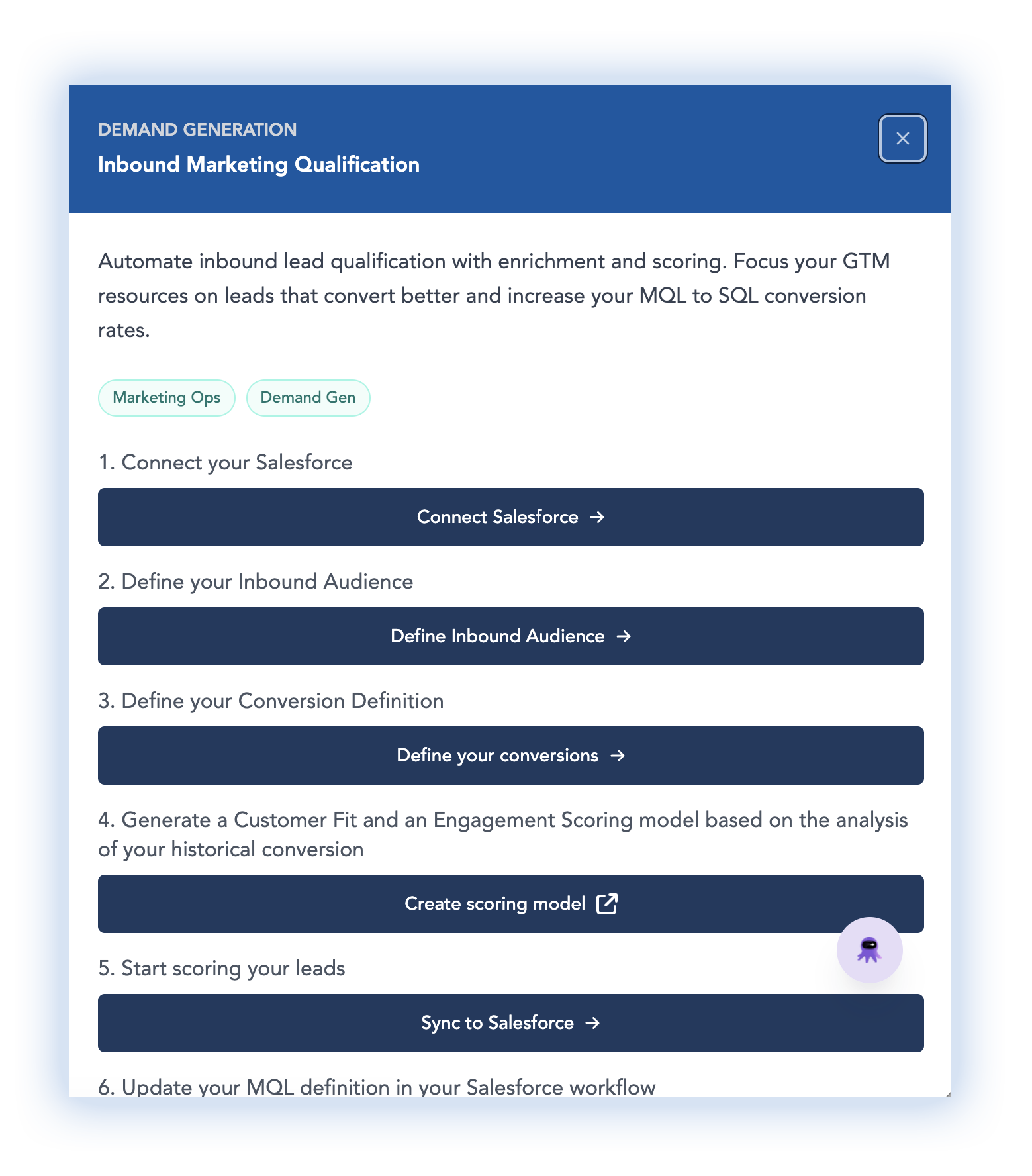
Collect lead data from multiple sources.
- Gather behavioral data including web visits, email engagement, and product usage.
- Incorporate firmographic, demographic, and technographic details about companies and buyer roles.
- Include third-party intent and job hiring signals from platforms like 6sense and PredictLeads.
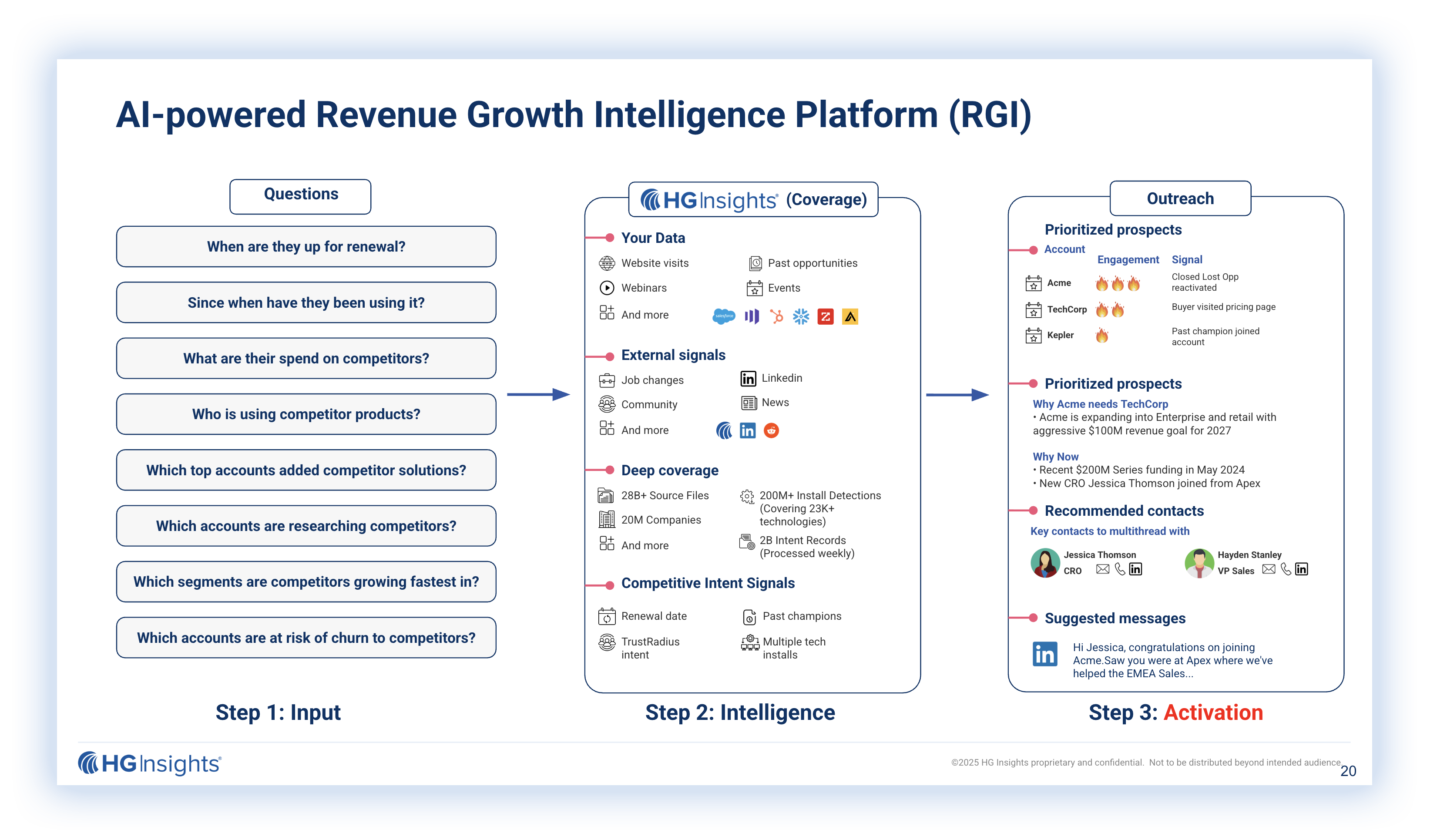
Apply AI to score leads by fit and intent.
- Analyze historical customer data to build custom scoring models.
- Assign Customer Fit and Likelihood to Buy scores for each lead.
- Combine scores into a Lead Grade (A to E) to prioritize follow-up.
Categorize inbound leads based on scores.
- Identify high-fit, high-intent leads that require immediate sales action.
- Assign lower-priority leads to nurture or delayed follow-up segments.
- Create actionable lead categories for targeted workflows.
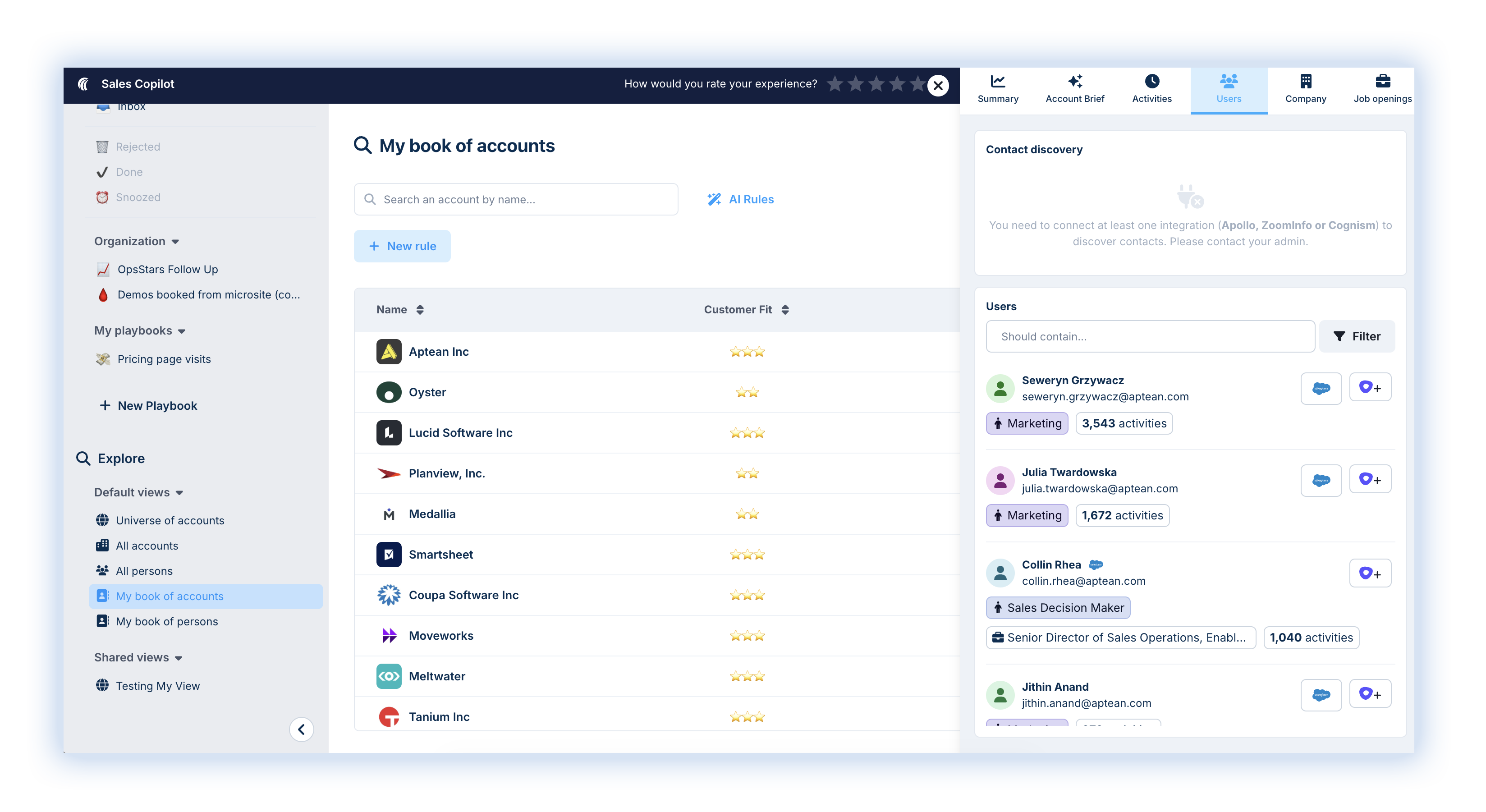
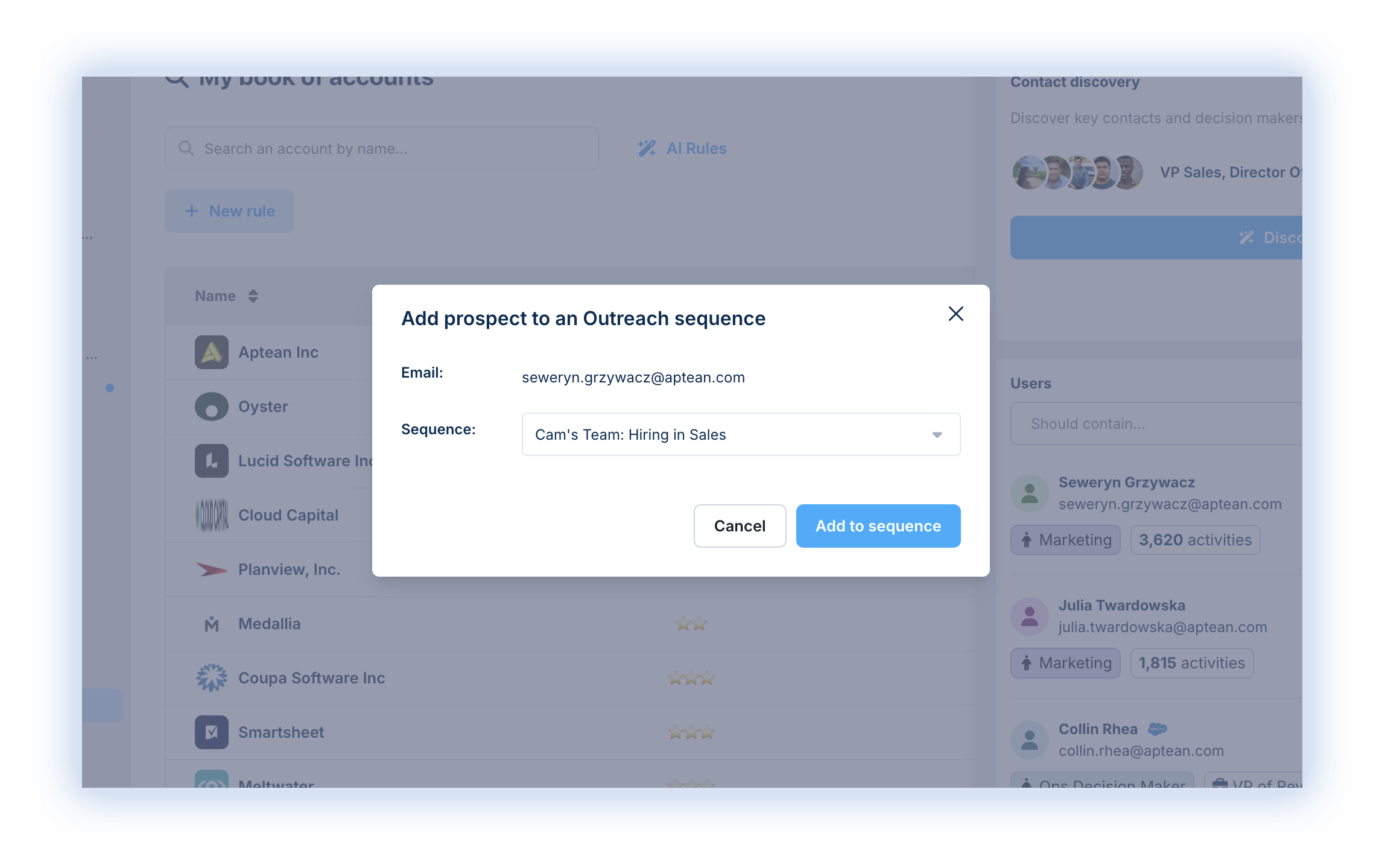
Trigger actions in sales and marketing tools.
- HG Insights surfaces the scores and signals; your team uses them to configure workflows in tools like your CRM, MAP, or sales engagement platform.
- Enroll leads into your existing sequences based on HG-powered customer signals (e.g., product usage, firmographics, or intent).
- Configure real-time alerts in your own systems when high-value accounts show key buying behaviors surfaced by HG.
Explore Other Use Cases
FAQ: Inbound Marketing Automation
How does HG Insights improve inbound lead qualification and speed to response?
HG Insights eliminates manual lead qualification by automatically scoring inbound leads based on ICP fit, account context, and real-time behavioral and intent signals. Leads are evaluated the moment they enter your systems, allowing teams to respond immediately to high-value prospects.
By combining firmographics, technographics, account insights, and engagement data, HG ensures sales and marketing teams focus on leads that are both qualified and ready to engage. This dramatically reduces response time and increases conversion rates.
How are inbound leads scored and segmented with HG Insights?
HG Insights uses AI-driven models to score inbound leads based on both fit and likelihood to buy. Scoring incorporates historical customer data, account-level attributes, behavioral signals, and verified intent data.
Leads are automatically segmented into actionable categories such as sales-ready, nurture, or monitor. This allows teams to route, message, and engage leads appropriately without relying on static rules or manual intervention.
How does HG Insights incorporate account context into inbound automation?
Unlike lead-only automation, HG Insights evaluates inbound leads within the context of their parent account. This includes account fit, technology environment, spend signals, buying-center structure, and active intent.
This account-aware approach prevents teams from over-prioritizing low-value leads from poor-fit accounts and ensures high-intent leads from strong-fit accounts receive immediate attention. It also improves alignment between inbound marketing, ABM, and sales motions.
How does HG Insights activate inbound insights inside existing CRM and marketing workflows?
HG Insights integrates directly with CRM, marketing automation platforms, and sales engagement tools. Predictive scores, segments, and signals are surfaced inside existing systems, where teams configure routing, alerts, and workflows.
Inbound leads can be automatically assigned, enrolled into sequences, or triggered for real-time alerts based on HG-powered signals. This ensures inbound automation enhances existing workflows without requiring teams to adopt new tools or processes.
Schedule Custom Demo