

Intent-Driven Leads
Most demand generation programs buy a signal and receive a contact who was never in market. Intent-Driven Leads starts from people who identified themselves while reading reviews and comparing products, then narrows that pool to the accounts a revenue team actually sells to.
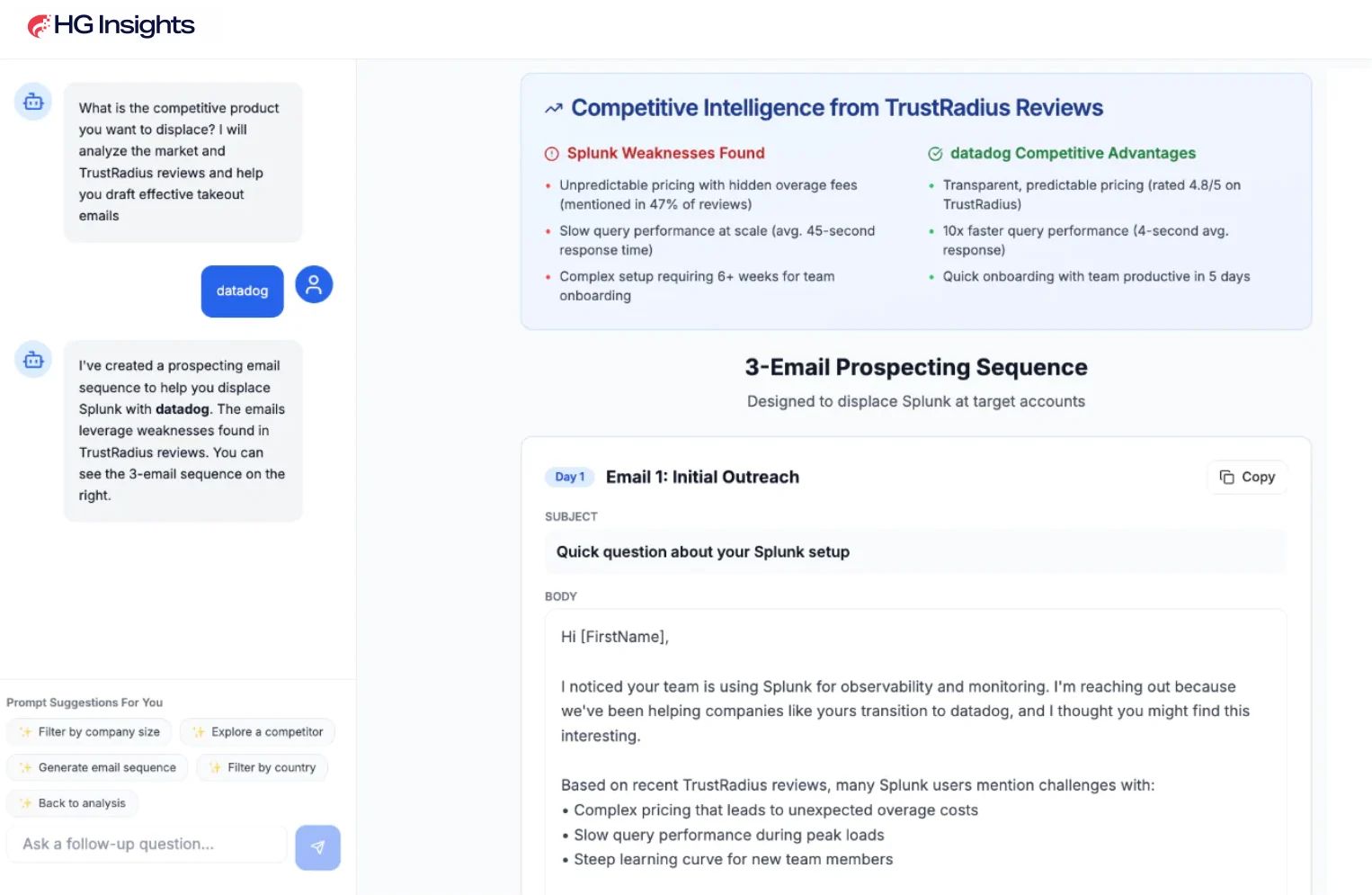
Intent-Driven Leads is a data product in the HG Insights Contextual Intelligence Platform that delivers opt-in leads from buyers researching products in Customer Voice, powered by TrustRadius, filtered by ICP and account propensity. Demand generation, ABM, and sales teams use Intent-Driven Leads to reach buyers already evaluating their category.
What problems do Intent-Driven Leads solve?
Demand generation leaders describe the same four failures when a lead program underperforms. Each one is a different defect: volume without intent, timing that arrives after a competitor, cost that rises while conversion falls, and contacts handed to sales with no explanation of why they were passed along.

Lead volume that never becomes pipeline
Syndication and blended-intent programs deliver contacts who downloaded an asset rather than buyers evaluating a purchase. Volume targets are met and qualified pipeline is not, because nothing in the record shows that the person was comparing products at the time the lead was captured.
In-market buyers found after a competitor
Category-level intent scores tell a team that an account is interested without naming the person or the moment. By the time an account score rises high enough to act on, the buyer has already shortlisted vendors elsewhere and the first conversation is a catch-up conversation.
Acquisition cost climbing against flat conversion
When a program cannot separate a researching buyer from a casual visitor, spend is spread evenly across both. Cost per lead stays unpredictable, cost per opportunity rises, and the demand generation budget defends itself with activity metrics instead of pipeline contribution.
Sales receiving contacts with no context
A name, a title, and a company give a seller nothing to open with. Without the products the buyer compared or the category pages they read, outreach falls back on generic messaging, reply rates stay low, and reps quietly deprioritize marketing-sourced records.
What do Intent-Driven Leads do?
Intent-Driven Leads performs four capabilities in sequence: it captures verified in-market buyers, filters them against ICP and propensity criteria, attaches the research behavior behind each contact, and delivers the result into the systems a revenue team already runs.
Verified in-market buyer capture
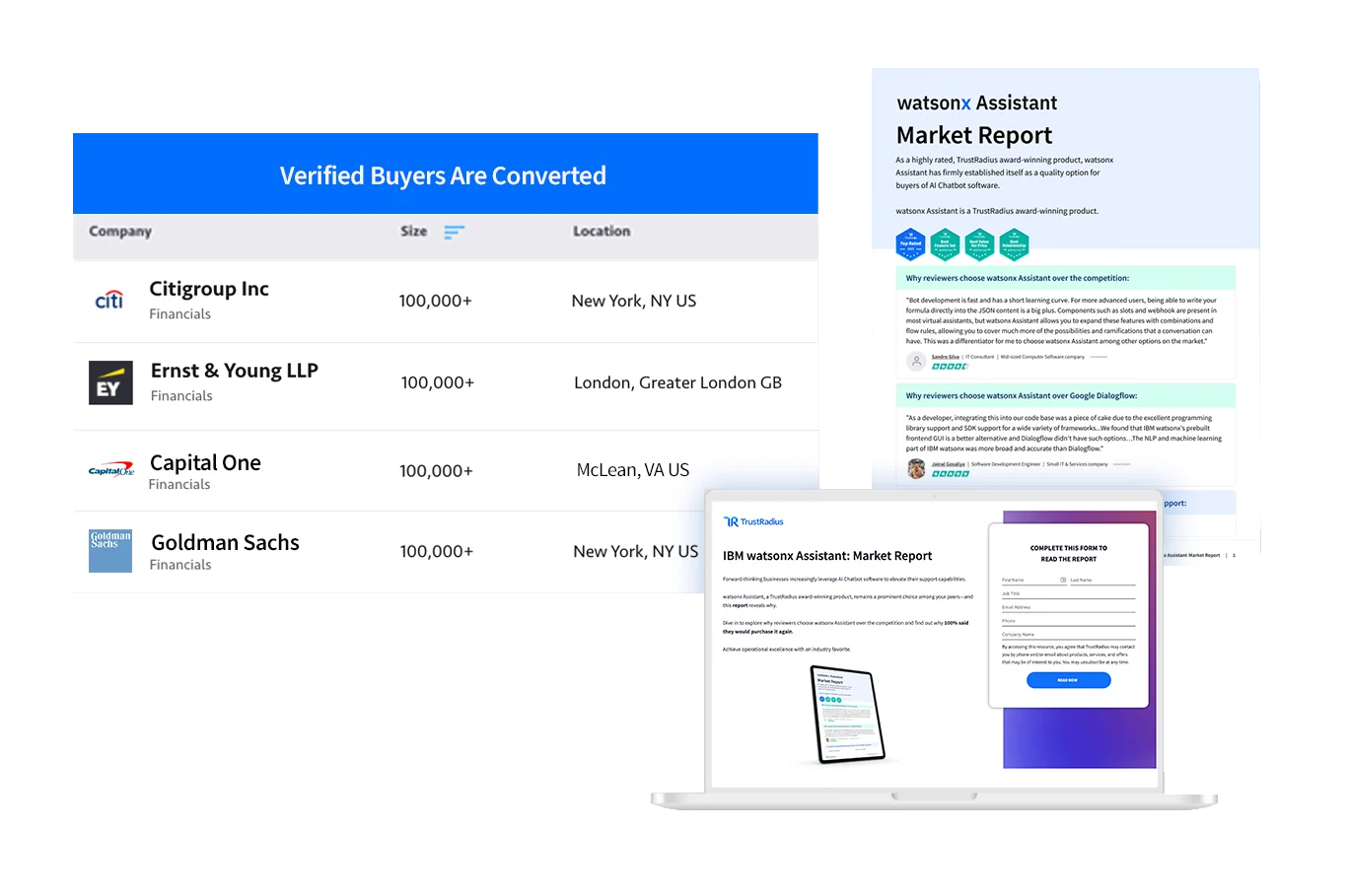
Intent-Driven Leads identifies buyers reading reviews, running product comparisons, and viewing vendor profiles inside Customer Voice, powered by TrustRadius, a community carrying more than 12 million buyer evaluations.
Capture happens at the moment of evaluation rather than after an account score crosses a threshold. Because 57% of community visitors plan a purchase within three months, the resulting contact set skews toward buyers in an active cycle, which shortens the gap between a marketing touch and a sales conversation.
ICP and account propensity filtering
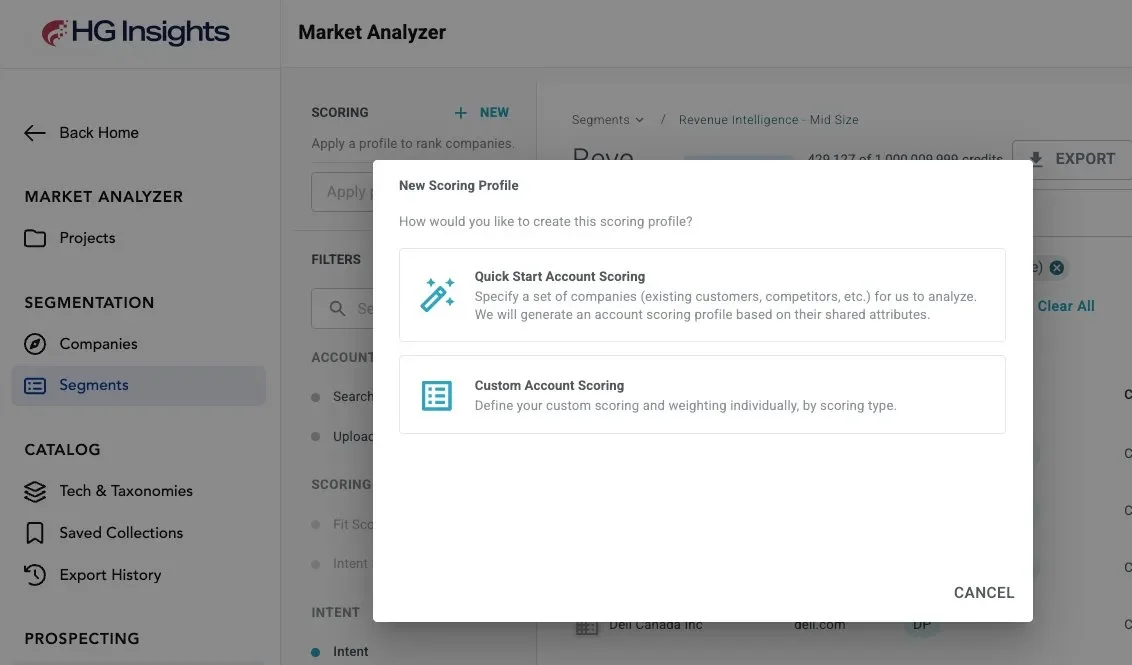
Intent-Driven Leads screens the raw buyer pool against firmographic, technographic, and propensity criteria supplied by the customer, releasing only records that match the defined profile.
Filtering is where a large research pool becomes a workable list. In the HG Insights company universe in Q3 2026, 152,697 companies showed high-strength buyer intent for Salesforce CRM; applying a United States, 1,000-plus-employee profile narrowed that set to 13,736 companies, a reduction of roughly 91%.
Buyer journey context on every record
Each lead carries the research behavior behind it: product profiles viewed, comparison pages opened, and category topics engaged, drawn from the same first-party activity that produces TrustRadius Buyer Intent.
Context is what makes a lead workable on first contact. A seller who can see which two competitors a buyer compared opens on that comparison rather than on a generic value statement, and marketing can route records to the nurture track that matches the stage the behavior indicates.
Review-derived campaign content and delivery
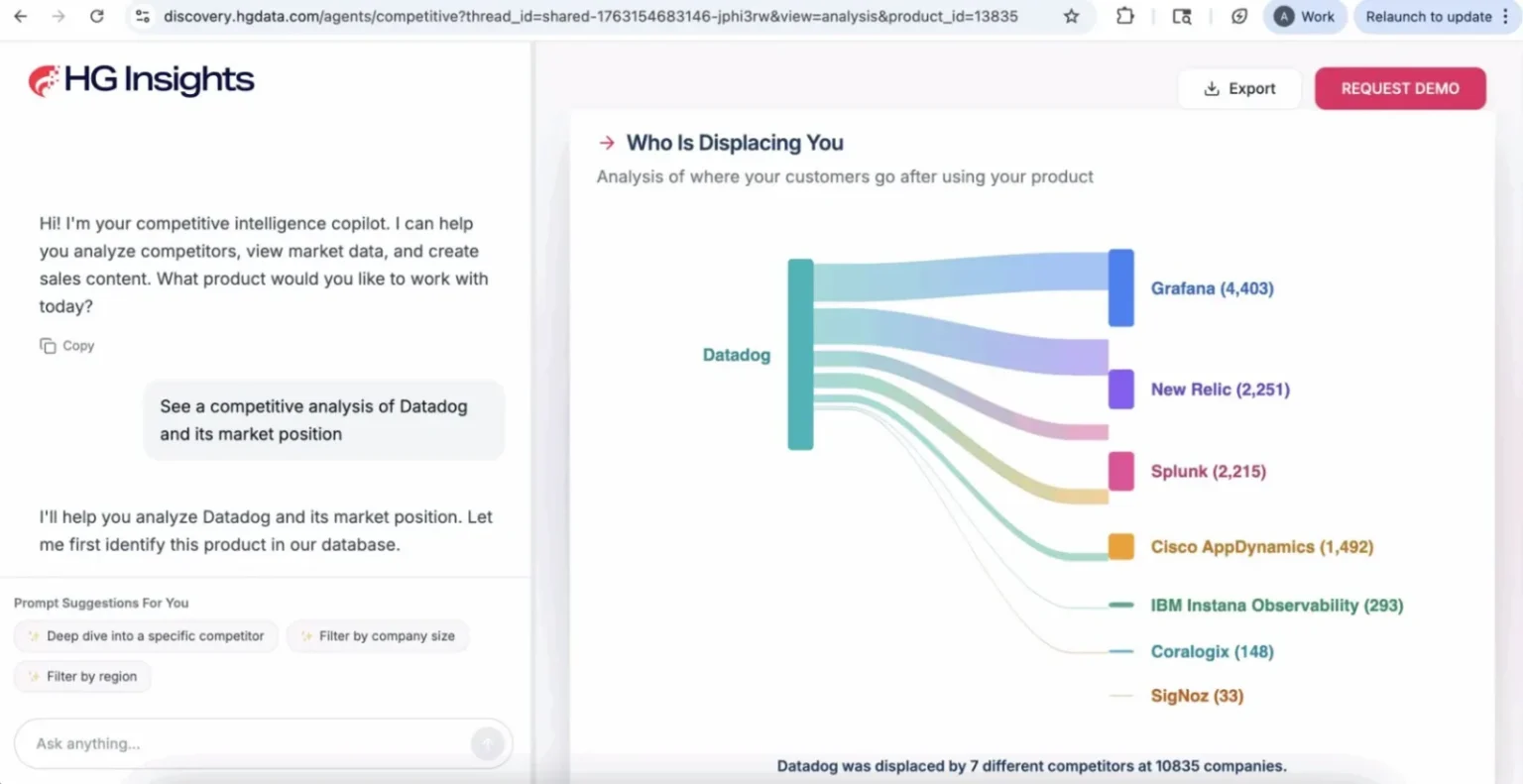
Intent-Driven Leads pairs market reports and customer stories built from verified reviews with delivery of opt-in records into CRM and marketing automation systems.
Content built from verified peer reviews carries authority that vendor-authored assets do not, which lifts response on the campaigns these leads enter. Delivery into existing systems means records reach scoring, routing, and follow-up through the workflow a team already operates rather than a separate list-handling process.
How do Intent-Driven Leads work?
Intent-Driven Leads run a three-stage pipeline. Research activity in the TrustRadius community is the input, ICP and propensity criteria are the filter, and opt-in records with buyer journey context are the output. The underlying signal is the same TrustRadius Buyer Intent described on the Buyer Intent page.
Buyers in the TrustRadius community read reviews, open comparison pages, and view product profiles. That first-party behavior is captured as Category Intent, an upper-funnel signal covering the category, and Product Intent, a lower-funnel signal tied to a named product. The customer supplies ICP criteria, target account lists, and propensity thresholds alongside it.
HG Insights resolves each researching account against firmographic and technographic records, then applies the customer ICP and propensity rules. Accounts outside the profile are dropped before any contact is released. The surviving set is the addressable buyer pool for that program, and the set shifts as further research activity arrives.
Contacts who opted in are released with the research behavior behind them: products compared, category topics engaged, and pages viewed. Records route into CRM and marketing automation systems for scoring and follow-up, and the underlying intent signals deliver into Salesforce, 6sense, Demandbase, ZoomInfo, and LinkedIn.
Which use cases do Intent-Driven Leads support?
Four programs draw on Intent-Driven Leads most often. Each one uses the same filtered buyer pool for a different job: account coverage, funnel volume, competitive displacement, or inbound routing.
Intent-Driven Leads supplies named contacts from target accounts already researching the category, so ABM programs spend budget on accounts showing evaluation behavior rather than on a static list. Account coverage deepens because contacts arrive with the products they compared attached.
Learn More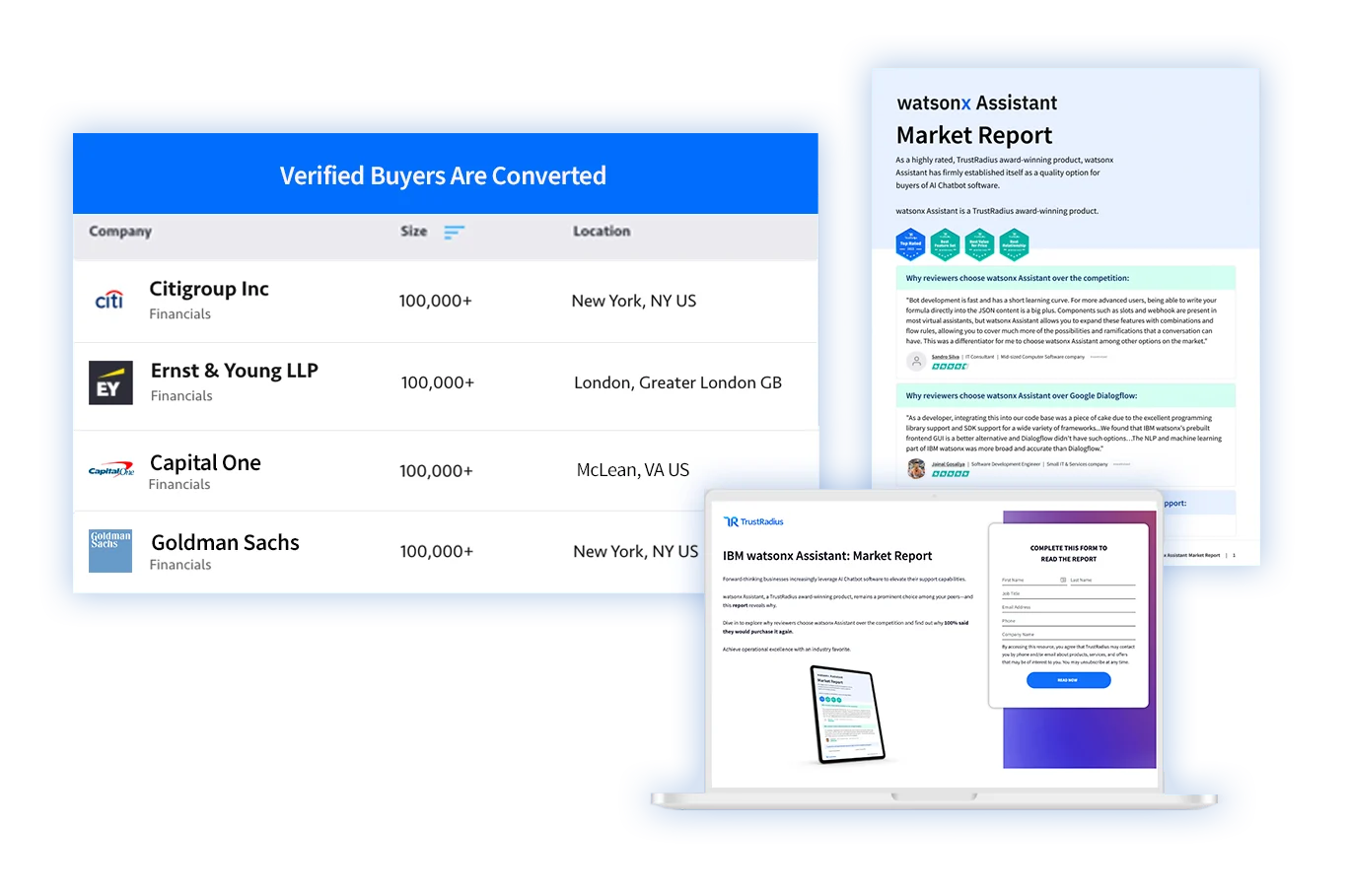
Intent-Driven Leads fills the funnel with opt-in contacts filtered to ICP and propensity, which stabilizes cost per lead and raises the share of records that convert. Demand generation teams report pipeline against lead quality rather than lead volume.
Learn MoreBuyers comparing a vendor against named competitors surface through Product Intent, so displacement campaigns reach evaluators mid-comparison. Review-derived content answers the comparison directly, which shortens the distance between first touch and a competitive conversation.
Learn More
Opt-in records route into marketing automation with buyer journey context attached, so nurture tracks branch on observed research behavior instead of form-fill assumptions. Scoring and routing rules run on evidence of evaluation rather than on asset downloads.
Learn MoreWhich results has Intent-Driven Leads produced?

Lucidworks builds and deploys intelligent search applications and needed to add more than 100 quality leads per quarter to its qualified pipeline. The team ran Intent-Driven Leads against a detailed ICP, drawing on validated downstream buyer intent from research activity in the TrustRadius community rather than blended third-party signals.
Filtering the researching buyer pool against that ICP produced a lead set the Lucidworks team could work directly. The program met the 100-lead quarterly target and contributed to funnel volume, with the team reporting that the leads showed a propensity to take high-value next steps rather than stalling after the first touch.
Who is Intent-Driven Leads built for?
Intent-Driven Leads fits B2B technology vendors whose category is actively reviewed and compared by buyers, and whose demand generation team already runs ICP-defined programs. The best-fit buyer has a documented ICP, a CRM that accepts routed records, and a nurture motion ready to receive contacts at different funnel stages.
The differentiator is source and sequence. Most providers in the buyer intent data market infer interest from IP-resolved content consumption across publisher networks. Intent-Driven Leads starts from first-party behavior on a review platform, where the buyer arrived deliberately to evaluate products.
Intent-Driven Leads is not a fit for teams buying contact volume irrespective of intent, for categories with thin review coverage, or for organizations that want a raw intent feed to model themselves. Displacement teams should read Intent-Driven Leads alongside competitive analysis and takeout.
Limitations

Buyer Intent is the upstream dependency
Intent-Driven Leads is built on TrustRadius Buyer Intent. The intent signal is the input the lead pool is filtered from, so a program without that signal in place has no buyer pool to narrow.
Coverage follows review activity
The buyer pool reflects who researches on TrustRadius. Categories with deep review coverage produce larger, steadier pools; emerging categories with few published reviews produce thinner ones, and program volume tracks that difference.
Only opted-in contacts are released as leads
Research activity without consent remains an account-level signal and is never delivered as a contact record. A program sized on total researching accounts will yield fewer deliverable leads than that account count suggests.
Account context is not contact enrichment
Each lead carries account-level firmographic and technographic context plus its buyer journey. Contact-level enrichment across a full buying committee is a separate capability and is not part of the lead record.
What do Intent-Driven Leads support?
The matrix below states what Intent-Driven Leads supports and the constraints that apply. Delivery targets follow the connector set on the integrations page.
TrustRadius Category Intent and Product Intent. Category Intent is upper funnel; Product Intent names a product.
Result lands in: Lead record and signal feeds.
More than 1 million active enterprise B2B buyers. Coverage reflects research on TrustRadius, not the open web.
Result lands in: Filtered pool per program.
Firmographic, technographic, and account propensity criteria. Defined per program, applied before records are released.
Result lands in: Pre-delivery filter stage.
HG records across 150+ IT spend categories and 15+ years of install history. Account level; contact-level enrichment is separate.
Result lands in: Lead record attributes.
Opt-in contact records with buyer journey context. Non-consented activity stays an account-level signal.
Result lands in: CRM and marketing automation.
Salesforce, 6sense, Demandbase, ZoomInfo, and LinkedIn. Category Intent is delivered on a weekly cadence.
Result lands in: Customer ABM and intent platforms.
Market reports and customer stories from verified reviews. Derived from published reviews of the customer's products.
Result lands in: Nurture and outreach sequences.
Which products work with Intent-Driven Leads?
Sales Copilot and Data Studio act on delivered records. Buyer Intent and Customer Voice shape the pool those records come from.

Multidimensional Buyer Intent
HG offers multidimensional buyer intent, pairing TrustRadius downstream Buyer Intent with HG buyer intent, which combines buyer intent signals with buyer installed-technology. This multidimensional buyer intent identifies opportunities for new logo, expansion or competitive displacement.

Customer Voice, powered by TrustRadius
HG Customer Voice produces the verified reviews that Intent-Driven Leads campaigns draw content from. More published reviews deepen the research activity the lead pool is built from.

Sales Copilot
Sales Copilot turns a delivered lead into a rep action, ranking accounts, recommending which offering to lead with, and drafting outreach against the buyer journey attached to the record.

Data Studio
Data Studio builds predictive scoring and routing models on first-party and HG data. Applied to Intent-Driven Leads records, it decides which contacts reach a seller now and which enter nurture.