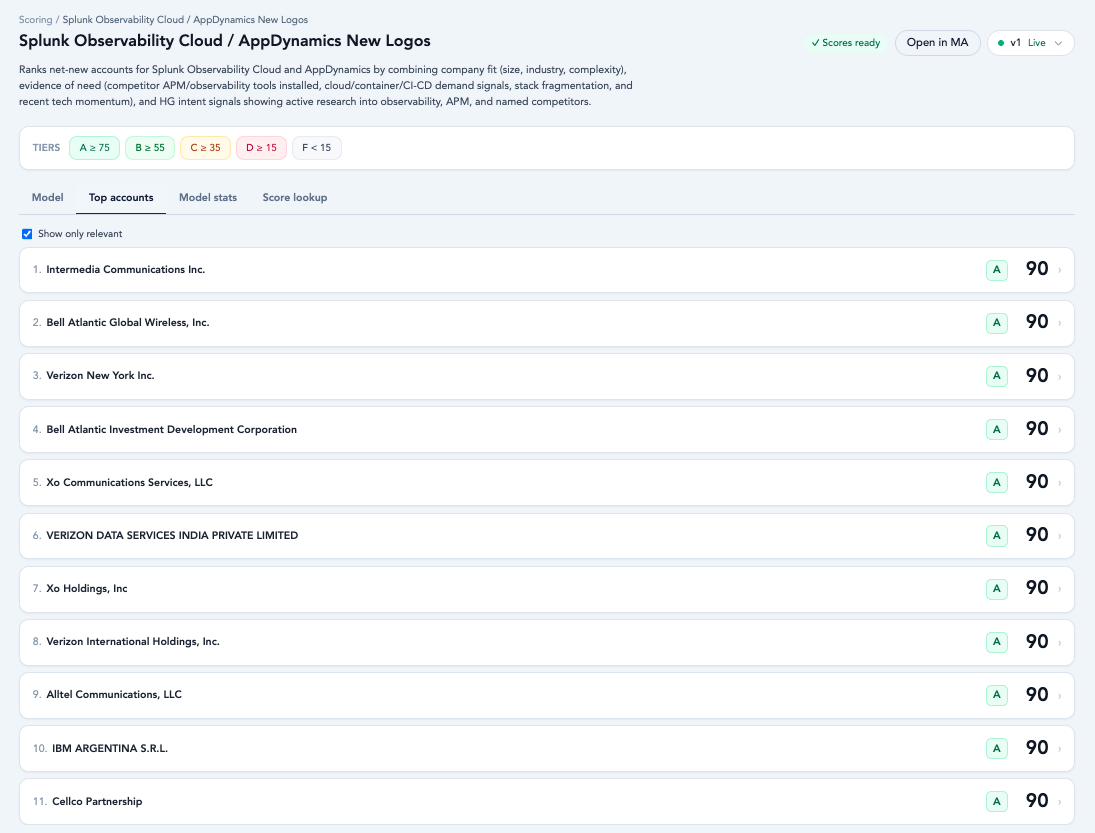
Go From Working A List To Working The Market
Identify and Prioritize accounts by Fit, Need, and Intent.
Challenges Outbound Teams Face When Prioritizing Accounts

Challenges
Wasted Effort on Low-Fit Accounts
Limited Account Lists
Black Box Scores
Sales and Marketing Misalignment
Missed Signals and Lost Opportunities
Singular, Manual, Static Scoring Criteria

Solutions
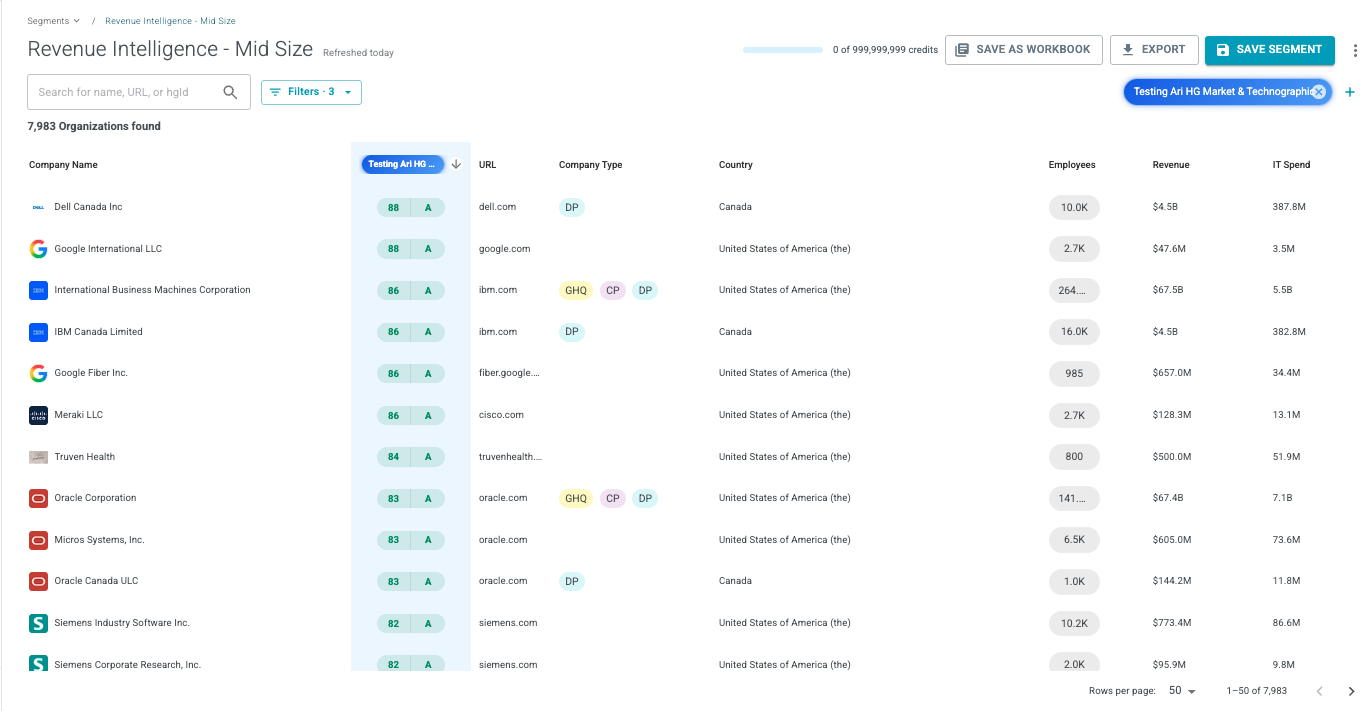
Precision Account Scoring
Score The Entire Addressable Market
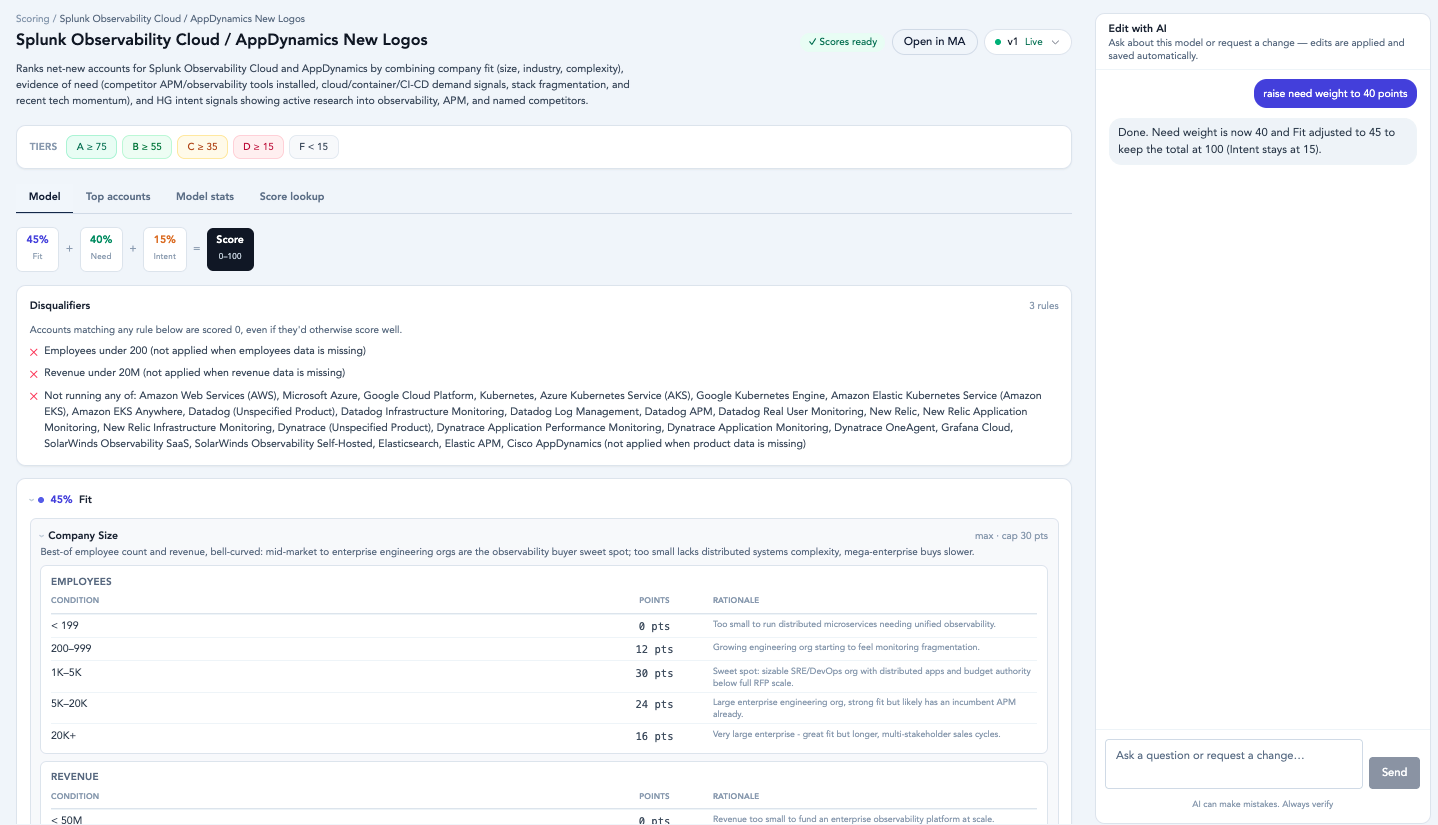
Explainable Scoring Logic
Unified Targeting Model
Simultaneous Multi-Model Configuration
Iterate in seconds, not months
Leverage AI to Prioritize Accounts with Deep Account Data
Transform account prioritization by combining technographic intelligence, firmographics, and buyer intent to identify accounts with the highest conversion potential.


How Equinix Software Gets Into Accounts Sooner and Drives Larger Deals with HG Insights
“Used a predictive ML model to use our customer base and leverage HG Insights account, technology, and IT spend insights. The quality of HG data allows us a view of prospects and customers, and their extent of their application, usage, and IT spend. Using HG Insights, we can compress sales cycles and broader deployments, high price points and lower churn.”
Barry Smith | Director of Vertical Marketing, Equinix
What Are the Key Steps for Predictive Account Targeting, Prioritization, and Scoring?
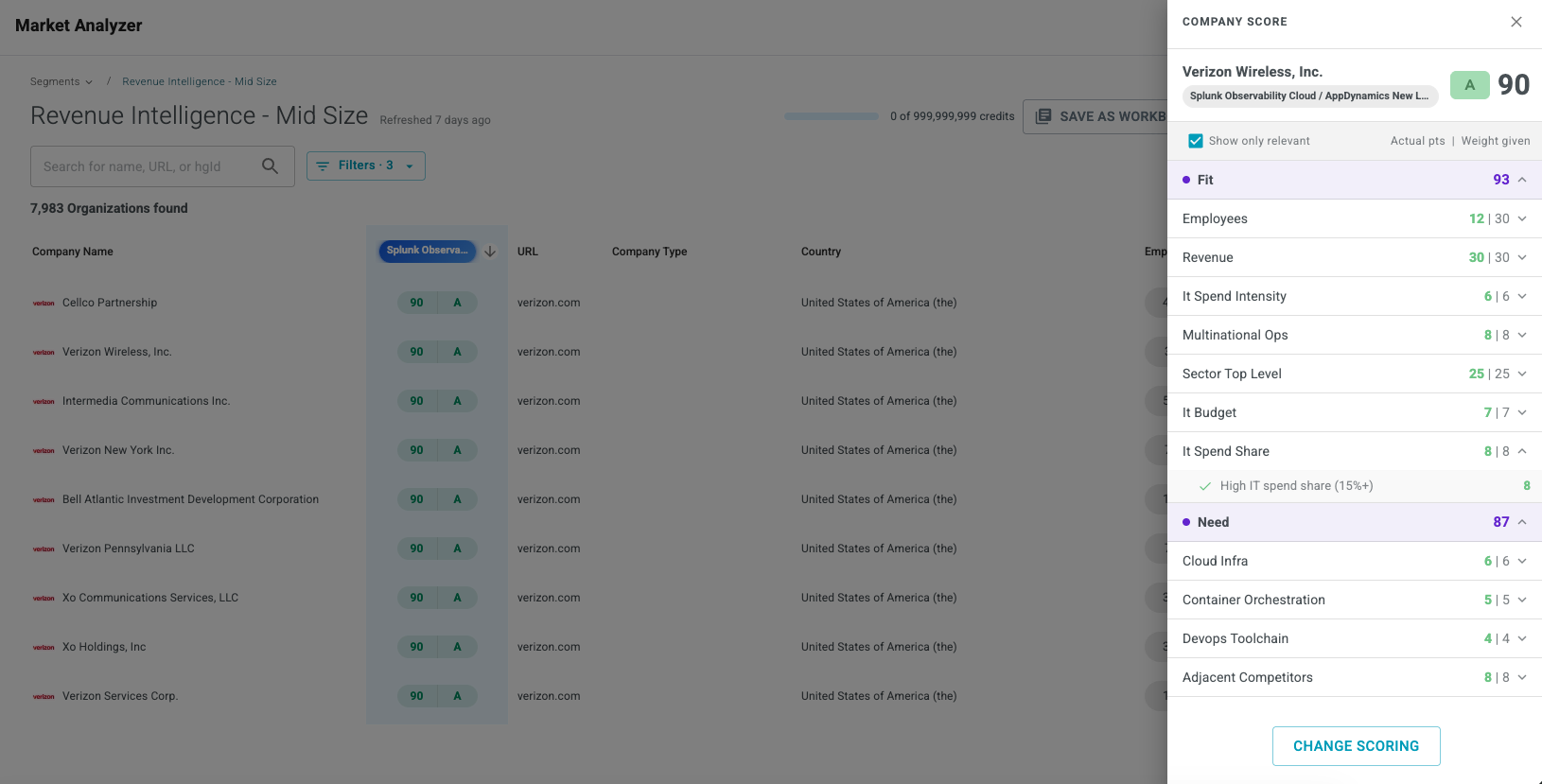
The platform uses weighting and context to calculate scoring, to know exactly why accounts receive certain scores – including the option to export or connect to your CRM.
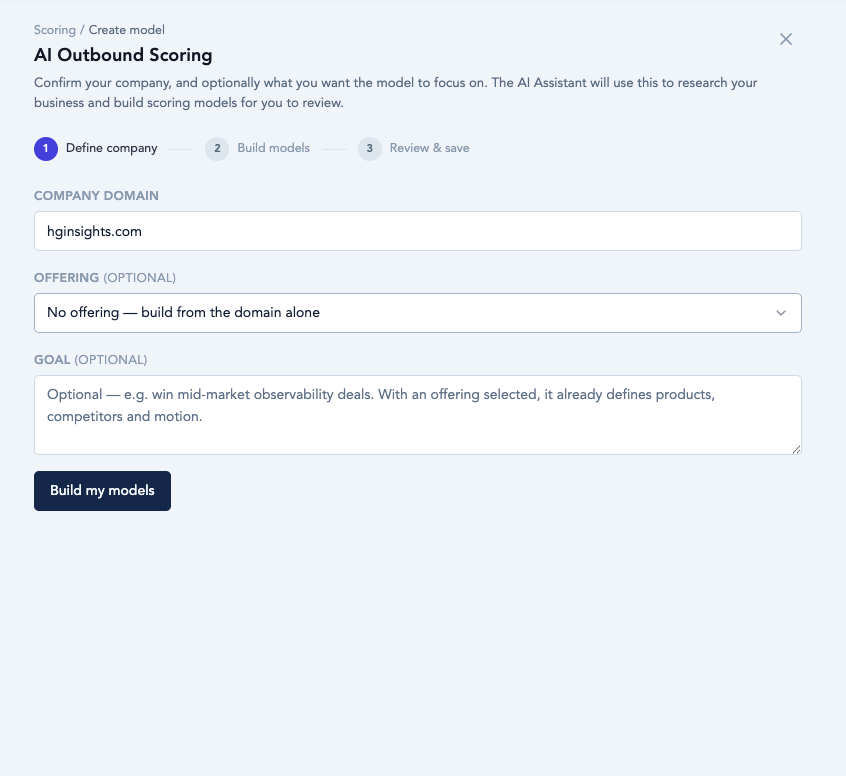
Define your company profile and surface target accounts
- No need to connect to your CRM. The scoring researches your company and products using your domain to assist in building a Fit/Need/Intent scoring model. The resulting model is point-based and deterministic.
- Run a separate model for each offering or product. The scoring supports as many parallel models as the motion requires.
- The AI agent handles the configuration work, not the scoring itself. It researches your company and products, applies best practices of model building, and configures the signals and weights. From that, your team can read and adjust.
Scoring you can explain and your sellers can understand
- Quickly make changes to the model using the chat interface and see changes before they affect live scores.
- Each model shows every condition, point allocation, and rationale providing scoring logic everyone can understand.
Activate and apply scoring criteria
- Activate predictive scoring and qualifications that run against over 70 million companies, not just what's already in your CRM.
- Dynamically apply predictive scoring using ICP fit, need, and intent to rank and segment accounts.
- Scoring is built using domain and product offerings, so a CRM connection is not required.
Prioritize accounts and trigger campaigns
- Push prioritized accounts and leads into CRM, MAP, or sales engagement platforms.
- Automatically trigger campaigns, sales plays, and content offers tailored to active intent signals.