
GTM leaders in 2026 operate in an increasingly dynamic environment where buyers shift channels, accelerate independent research, and make purchasing decisions based on real-time data signals rather than traditional linear journeys. As buying behavior becomes more complex, legacy segmentation approaches struggle to keep pace.
Traditional segmentation models that rely on static categories no longer match the speed and flexibility required by modern GTM workflows. These rigid frameworks limit responsiveness, reduce targeting accuracy, and create gaps between strategy and execution.
To succeed in this environment, GTM teams need segmentation approaches powered by AI, predictive intelligence, technographics, intent signals, and unified data across markets, accounts, and buyers. This shift enables organizations to move from static groupings to adaptive segmentation models that evolve alongside buyer behavior.
This guide explains how next-generation GTM segmentation helps organizations build smarter ICP design, strengthen cross-team alignment, and activate more precise go-to-market strategies that support revenue growth in 2026 and beyond. Why Segmentation Must Evolve For GTM Success In 2026
Buyer behavior has become far more dynamic than traditional segmentation models were designed to support. Today’s buyers rarely follow linear funnels. Instead, they research across multiple channels, compare vendors independently, and shift evaluation paths throughout the decision journey. As a result, static segmentation frameworks struggle to reflect real-time buying signals or support responsive prioritization.
This growing complexity is forcing GTM leaders to rethink how segmentation is structured and applied. To keep pace with constantly changing buyer movement and engagement patterns, organizations increasingly rely on dynamic segmentation models built on data-driven insights, predictive intelligence, and adaptive clustering that evolves as signals change. This approach enables faster response times, stronger prioritization accuracy, and more coordinated execution across teams.
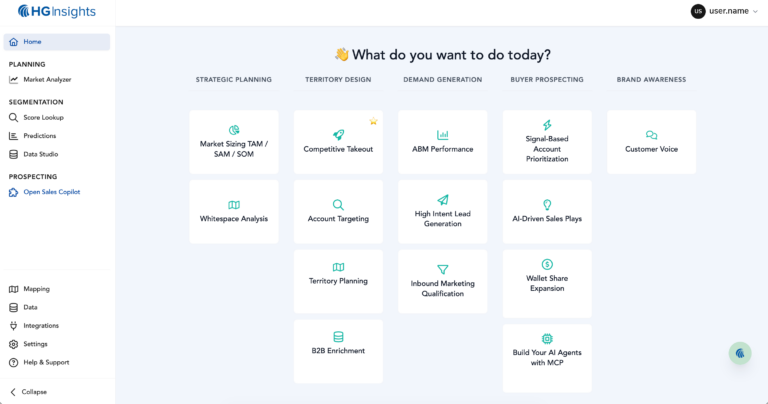
At the same time, segmentation maturity is increasingly defined by access to unified intelligence across market, account, and buyer data. Platforms that deliver revenue growth intelligence help GTM teams connect segmentation directly to measurable outcomes such as pipeline velocity, account prioritization performance, and conversion improvement, ensuring segmentation drives business impact rather than remaining a static planning exercise.
The Core Segmentation Inputs Every GTM Strategist Needs In 2026
Effective segmentation in 2026 depends on more than surface-level data points. High-performing GTM teams combine multiple intelligence layers to build segmentation models that reflect real market opportunity, account readiness, and buyer behavior. By integrating market-level insights with account and fit-based intelligence, strategists gain the foundation needed to design scalable, revenue-aligned segmentation frameworks.
Market Intelligence For High-Level Segmentation
Market intelligence provides the strategic foundation GTM leaders use to understand where the highest-value opportunities exist and how resources should be allocated. By leveraging TAM, SAM, and SOM data, teams can identify opportunity concentration, shape territory structures, and prioritize vertical focus with greater precision. This intelligence layer also informs ICP design and segmentation frameworks, ensuring market-level decisions translate into actionable targeting and scalable GTM execution
Account Intelligence For ICP Tiers & Fit-Based Segments
Fit-based segmentation in 2026 is grounded in firmographic attributes, technographics for segmentation, and verified spend insights. These inputs enable ICP design, creation of account tiers, lookalike models, and expansion clusters. Strategists rely on an accurate ICP segmentation strategy to classify high-value accounts, optimize targeting, and support predictive account targeting, prioritization, and scoring.
Buyer Intent For Behavioral Segmentation
Intent-driven segmentation helps GTM teams understand which accounts are actively researching their category. Buyer-led segmentation creates dynamic behavioral groups such as in-market, problem-aware, or competitive evaluator. These intent signals enable GTM leaders to align messaging, timing, and channel strategy with buyer needs.
First-Party Lifecycle & Engagement Signals
CRM activity, product usage insights, and content engagement help map lifecycle segments across existing customers and prospects. These signals support cross-sell, upsell, renewal targeting, and churn-prevention segments. They also strengthen B2B data enrichment for GTM precision across revenue workflows.
Frequently Asked Questions
How should GTM leaders approach segmentation differently in 2026?
GTM leaders should move from static segmentation to adaptive, AI-driven models that evolve with intent signals, technographics, and real-time buyer behavior. Segmentation must connect strategy, prioritization, and execution across GTM teams.
What role does buyer intent play in segmentation models?
Buyer intent enables behavioral and intent-driven segmentation. It helps identify in-market and problem-aware accounts, allowing GTM teams to time outreach, tailor messaging, and align activation to research patterns.
How can segmentation power more effective ABM campaigns?
Segmentation improves ABM by defining high-value ICP tiers, aligning outreach to segment-specific themes, and enabling predictive account targeting. It helps teams focus resources on the right accounts at the right moment.
How does HG Insights support segmentation maturity across GTM?
HG Insights provides unified revenue growth intelligence, market and account intelligence, buyer intent insights, and predictive modeling that strengthen ICP segmentation strategy, prioritization accuracy, and GTM alignment.