

Businesses rely heavily on internal metrics to drive decisions. However, external data that provides competitive intelligence is becoming an equally critical input for delivering better-positioned products and services. Especially in the technology sales and marketing environment, where competition is tight.
HG Insights’ own buyer intent data tracked over 460 unique companies actively researching Sales Intelligence tools in a single month: comparing solutions, reviewing product listings, and evaluating competitive alternatives. That sustained activity reflects what most GTM teams already feel; external competitive intelligence has moved from a nice-to-have to essential operating infrastructure. This post covers the tools worth evaluating, what each one actually does well, and where HG Insights fits in the stack.
What are competitive intelligence tools?
Competitive intelligence tools cover a wide range: marketing and content monitoring, sales intelligence, business intelligence, buyer intent data, and technographic tools that reveal what’s actually installed in a competitor’s stack. The category is broad because the problem is broad. What market are we actually competing in? Who’s winning accounts we should be winning? What are they building next? Different tools answer different versions of that question.
The demand for competitive intelligence capabilities continues to accelerate. According to HG Insights’ internal buyer intent data, over 460 unique companies showed active research signals for Sales Intelligence tools in the past month alone: comparing solutions, reviewing product listings, and evaluating competitive alternatives. This sustained buyer activity underscores the growing recognition that data-driven competitive intelligence isn’t a nice-to-have; it’s essential infrastructure for modern GTM teams looking to outmaneuver the competition.
Competitive intelligence tools offer insights into the current and potential future strategies of their business peers. Leaders can make intelligent decisions based on data to drive their company’s vision forward.
Why are competitive intelligence tools important?
Competitive intelligence tools allow companies to understand their opportunities and challenges within their competitive environment. By accessing outside data, companies can have a more realistic picture of their positioning in a market and where they need to invest resources to gain an advantage.
Competitive intelligence tools help:
- Product teams develop better applications
- Executives keep up with the news and developments of top competitors
- Marketing teams understand their best opportunities for product positioning
- Digital marketing teams understand what content, social, and advertising strategies to pursue
- Executives see the digital footprint of competitors in order to compare investments
By having critical information located in a single platform, team members can easily access data before analyzing and collaborating on future projects.
12 competitive intelligence tools to use in 2026
Competitive intelligence varies a great deal by industry and the scope of activities a team wants to track. So we’ve divided these intelligence tools into three subcategories: overall business intelligence, marketing, and sales.
Business intelligence tools:
- Gartner
- Crunchbase
- Contify
- Brand24
Marketing intelligence tools:
- HG Insights
- SimilarWeb
- BuzzSumo
- Netbase Quid
- Owletter
Sales intelligence tools:
- Klue
- Crayon
Business intelligence tools
Business intelligence tools are for the strategic layer: market movements, funding signals, company data, and analyst positioning. They’re less about daily execution and more about understanding the landscape before you decide where to compete.
Gartner
(source)
Main Perk: High-quality, in-depth insights and advisory
Best For: Enterprises
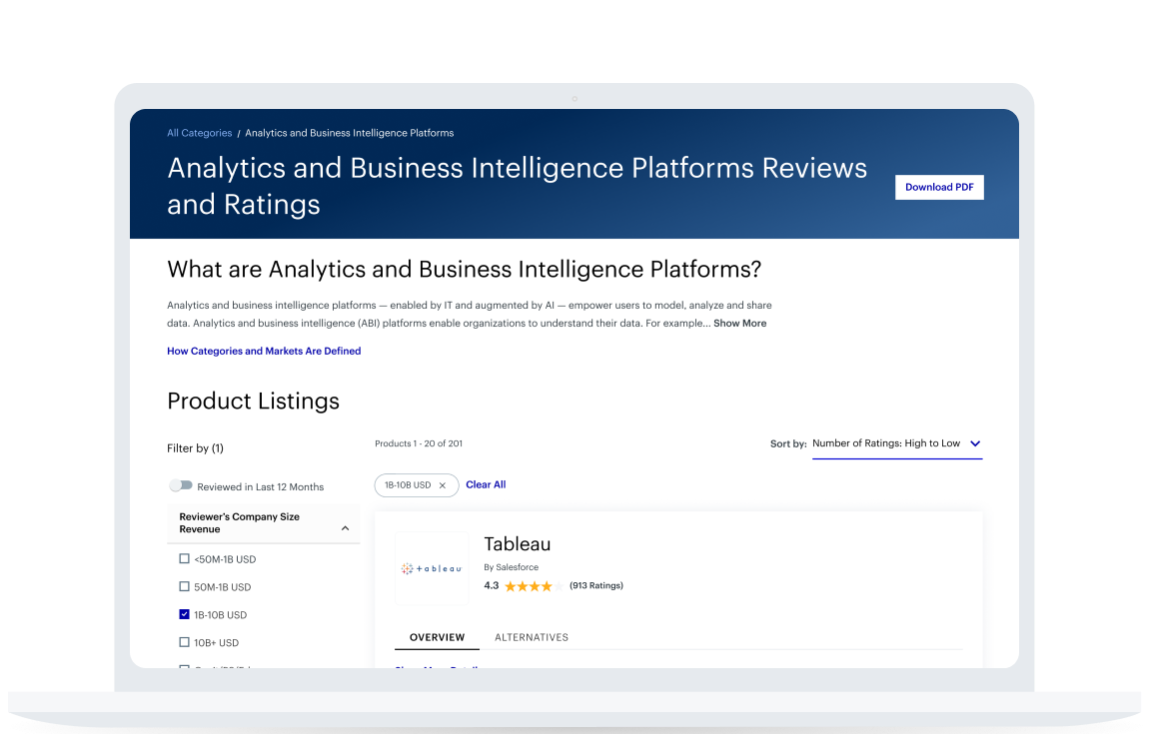
Gartner is one of the world’s leading business intelligence companies, providing key tools sales leaders can use to increase their growth. The breadth and depth of their information are vast, but are offered in a consultative manner rather than via a software solution.
Executives can use their insights and tools to fortify their strategies and grow with consumer insights based on research. However, these types of competitive intelligence tools shouldn’t be leaned on exclusively as they often rely on self-reported data.
Crunchbase
(source)
- Main Perk: Find emerging trends and conduct market research with live data
- Best For: Mid-size and Enterprise
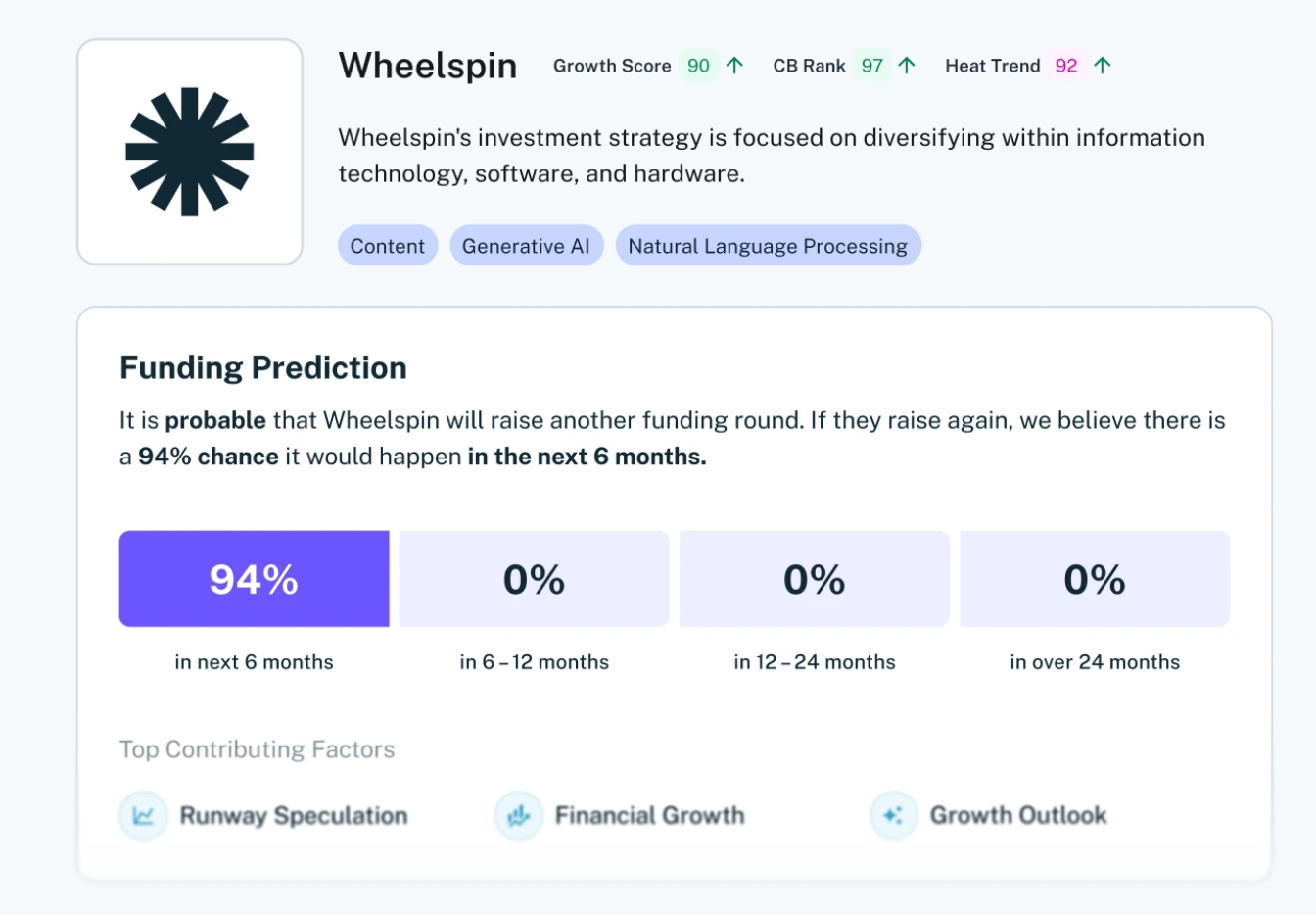
Crunchbase is an online database that offers information on public and private companies of all sizes. At the most basic level, companies can research other companies for free. Paid subscriptions give users advanced search and monitoring features and data enrichment capabilities.
Users can import lists of companies they’re researching and Crunchbase will find information on those companies. Data is presented in a flexible format and users can set up personalized alerts for companies they monitor.
Contify
(source)
- Main Perk: AI-enabled platform to track information on competitors, customers, and industry segments in one platform. Global companies benefit from its ability to track non-English sources.
- Best For: Enterprises
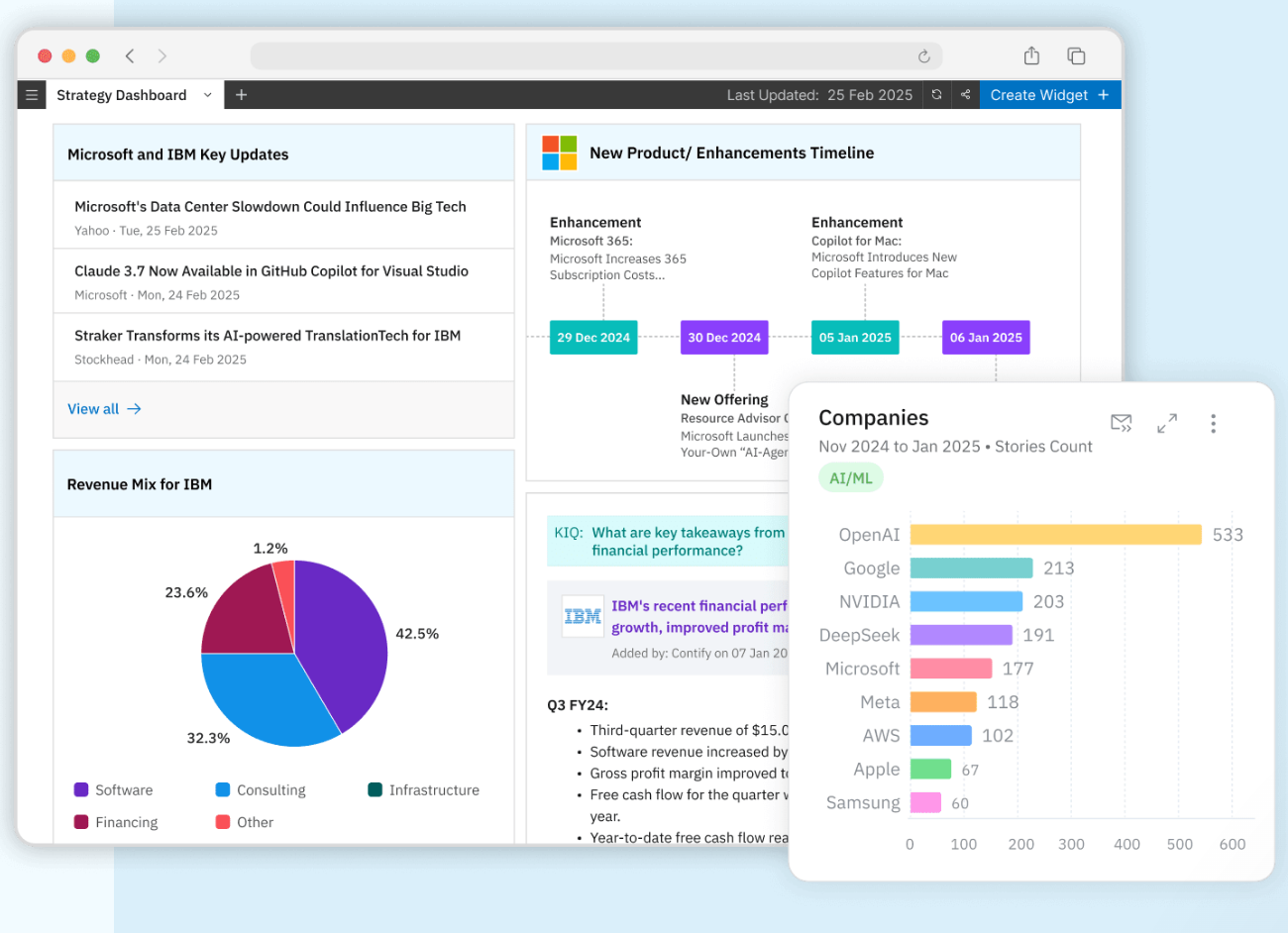
Contify uses machine learning to drive its market and competitive intelligence platform. The solution collects and curates actionable information for users. Their data comes from over 200,000 sources, including news websites, job boards, company websites, press release agencies, social media, regulatory portals, subscription databases, and review websites. Users can also add custom sources, like discussion forums and specific trade publications.
While machine learning mines the data, this solution makes their data more precise with a layer of human curation.
Brand24

(source)
- Main Perk: Real-time brand and competitor monitoring across social, web, news, podcasts, and AI language models
- Best For: Mid-size businesses to enterprises
Brand24 monitors mentions across social media, news, blogs, review platforms, podcasts, newsletters, and LLMs like ChatGPT and Perplexity. That last source type is new but increasingly important: buyers now use AI assistants to research vendors before ever visiting a website, and Brand24 shows you whether your competitors are showing up in those answers.
Real-time alerts replace Google Alerts’ delayed email digests, and sentiment analysis comes standard. Results are sorted by source, reach, and emotional tone, with Boolean search and context filters to cut irrelevant noise. The setup is fast — most teams are monitoring within a day.
It works best for catching competitor campaigns as they launch, tracking share of voice over time, and spotting reputation shifts early. Paid plans start at $99 per month with a free trial available.
Marketing intelligence tools
Marketing intelligence tools focus on what competitors are doing with their campaigns, content, and audiences. The tools below cover a wide range, from technology adoption and spend data to social monitoring and content analysis.
HG Insights

- Main Perk: The only GTM intelligence platform that combines technographic data, IT spend intelligence, and buyer intent signals with a standalone market analysis tool and no-code predictive modeling.
- Best For: Enterprise and mid-market revenue teams in sales, marketing, and RevOps.
HG Insights’ RGI Platform sits in a different category from most tools on this list. Where others track competitor activity or monitor content, HG’s Revenue Growth Intelligence Platform tells you which markets are worth entering, which accounts are most likely to buy, and when to engage them. Market Analyzer lets teams analyze total addressable markets and technology adoption trends; not just individual accounts. The RGI Fabric connects technographics, IT spend, and buyer intent into a single data model, so the intelligence flows into CRM, marketing automation, and sales tools rather than living in a separate dashboard.
SimilarWeb

(source)
- Main Perk: Deep insights
- Best For: Sales and marketing teams
With SimilarWeb, you’ll have an easier time researching your competition’s referrals and other sources of traffic. SimilarWeb does a good job of letting you really see how you stack up against your competitors in terms of bounce rate, page visits, page views, and time on site. SimilarWeb’s dashboard is most commonly compared to Google Analytics but for your competitor’s domains.
SimilarWeb also provides competitor mobile app data, where you can view one month of mobile data and three months of web traffic data for free. SimilarWeb also offers SEO and PPC research, including keywords, traffic sources, and visitor engagement.
BuzzSumo

(source)
- Main Perk: Understanding competitors’ content strategies
- Best For: Midsize businesses
Before you jump into a content strategy session, you want to be armed with knowledge of trending topics and what your competitors are focusing on. BuzzSumo helps you better understand your competitors’ content strategies and how they’re planning to reach their audience.
The platform supplies intelligence pertaining to competitor content that is receiving traction, how your content compares to competitors, and content curation and planning. BuzzSumo allows you to conduct in-depth analysis and filter your research by topic and timeliness.
BuzzSumo also features social media monitoring and even influencer outreach. It enables you to create alerts so you know when competitors have published new content.
Quid
(source)
- Main Perk: Analyzes millions of text-based documents and organizes that content visually
- Best for: Midsize to enterprise level
With Quid, businesses can uncover insights and social sentiment across industries. This social analytics platform uses historical and real-time data to offer market and branding research, competitive intelligence, trend analysis, voice of consumers, and more. This tool helps teams identify risks and new opportunities to drive new strategies.
Owletter
(source)
- Main Perk: Monitoring competitors’ email marketing
- Best For: Agencies and retailers
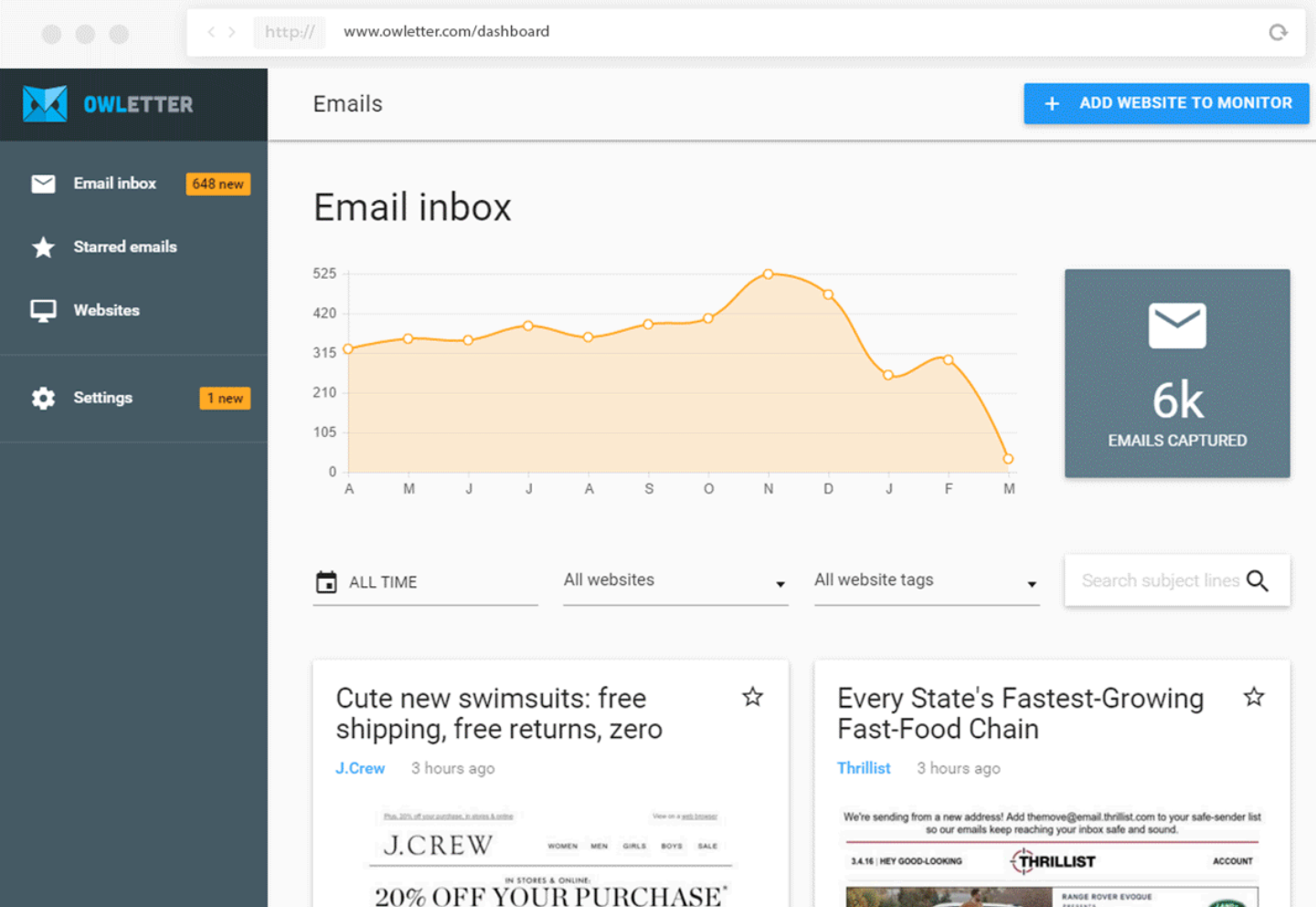
Owletter is an email analytics intelligence tool that’s great for studying how your competitors are using their email marketing. Learn how often they send out emails, on what days, and whether their email schedule changes seasonally.
Owletter also keeps marketers in mind with their tagging and alerting features. As a marketer, you can save tags based on trends you want to follow and receive notifications when those tags pop up.
For creative agencies, Owletter takes it a step further and allows you to use tags to track prospective clients or current clients’ competitors.
Sales intelligence tools
Sales intelligence tools answer a simple question: who should I call, and what do I say? These platforms surface account-level data, competitive installs, and buying signals so reps can prioritize their time and walk into conversations with actual context.
Klue

(source)
- Main Perk: Tracks competitors and compares data to internal sources
- Best For: Enterprise sales
Klue is an AI-powered platform for product marketers and sales teams to gain quick insights into competitors. The platform organizes data into visual battle cards, making it simple for sales teams to view the data they need.
Data is mined from publicly available information. Teams can catalog information and easily share it with colleagues.
Crayon

(source)
- Main Perk: See competitor products, messaging, reviews, news, content, and customers in one platform
- Best For: Enterprises
Crayon’s software platform enables businesses to track competitor pricing changes, marketing campaigns, and more. Companies can see potential hiring plans, go-to-market strategies, and more. This solution also offers battle cards to inform sales pitches.
Crayon helps analysts monitor market trends, using both artificial and human intelligence. Customers receive a weekly curated email digest of notable market trends.
Tools like Klue and Crayon are purpose-built for competitive enablement: organizing competitor intelligence into battlecards that sales teams can use in live deals. They answer “what do I say when a prospect brings up a competitor?” HG Insights answers an earlier question: “which accounts have that competitor installed, how long have they had it, and when does their contract open?”
Find the best data for your competitive intelligence program
Most teams need more than one type of competitive intelligence. Tools like SimilarWeb and BuzzSumo handle digital and content monitoring well. Klue and Crayon support deal-level sales enablement. What they don’t provide is account-level intelligence: the ability to see what technology a company runs, how much they’re spending on it, and whether they’re actively evaluating alternatives right now. That’s the gap the HG Insights RGI Platform is built to fill.
If your prospecting and pipeline work still relies on static lists or surface-level research, see what account intelligence looks like in practice.