

What is enterprise account-based marketing?
Enterprise Account-Based Marketing (ABM) is a go-to-market strategy where sales and marketing concentrate their resources on a carefully selected group of high-value enterprise accounts. Instead of optimizing for lead volume across a broad audience, enterprise ABM treats each target organization as a distinct market, with messaging, content, and outreach designed specifically for that company’s structure, challenges, and goals.
What makes enterprise ABM fundamentally different from traditional demand generation is where the investment goes. Traditional marketing spreads effort wide and measures success by how many leads come in. Enterprise ABM goes deep and measures success by the depth of engagement, deal size, and long-term revenue generated within a small number of accounts where the potential justifies that level of commitment.
The accounts enterprise ABM targets, typically Fortune 500 and Global 2000 companies, are structurally complex. A single deal may involve stakeholders across IT, procurement, operations, finance, and the C-suite, each evaluating your solution through a different lens. Enterprise ABM is built to work within that complexity rather than simplify it away. It acknowledges that winning a large enterprise account means engaging multiple buying groups across business units, geographies, and decision-making layers with a coordinated strategy that speaks to each one.
How enterprise ABM works in practice
Definitions only go so far. Seeing enterprise ABM in practice makes the approach concrete.
To make this concrete, imagine you’re selling a technology solution to Fortune 500 banks. An enterprise ABM program wouldn’t start with a vertical-wide campaign. It would start by selecting one specific institution and mapping the stakeholders who influence technology purchasing across IT security, compliance, and operations.
From there, the team builds campaigns around that account’s operational reality. This might include content addressing the bank’s specific regulatory compliance requirements, analysis showing how the solution integrates with their existing technology infrastructure, or messaging that reflects the challenges of operating across dozens of countries with different data sovereignty laws.
Outreach would be coordinated across channels and roles:
- The CISO receives a custom research report on emerging threats in financial services.
- The VP of Operations gets an invitation to an executive roundtable with peers from similar institutions.
- The procurement team receives an ROI calculator built with the bank’s own publicly available financial data.
Every touchpoint demonstrates that your team understands the account’s world, not just your own product. That’s the standard enterprise ABM sets, and it’s what separates it from every other form of B2B marketing.
Growth ABM vs. enterprise ABM: how they differ
ABM operates on a spectrum, and understanding where enterprise ABM sits relative to growth ABM is important for allocating resources and setting realistic expectations.
Growth ABM drives scalable revenue expansion across a broader set of mid-market accounts. It relies on automation and technology to deliver semi-customized experiences to dozens or hundreds of target accounts simultaneously. Personalization happens at the segment level rather than the individual account level. Growth ABM is efficient, fast, and well-suited for companies looking to accelerate pipeline across a large addressable market.
Enterprise ABM operates at the opposite end. It applies highly customized marketing to a small number of the largest, most strategically valuable accounts. A full enterprise ABM program might dedicate an entire campaign to a single Fortune 500 company, with messaging, content, events, and sales plays all built specifically for that organization.
The differences come down to scale, investment, and depth:
- Growth ABM might target 200 accounts with five segments receiving tailored messaging tracks. It measures success through pipeline velocity and conversion rates across the account set.
- Enterprise ABM might target 10 accounts, each receiving a fully bespoke strategy. It measures success through deal size, multi-year contract value, and depth of relationship across business units within a single account.
Most mature B2B organizations run both programs simultaneously; growth ABM for the broader target market and enterprise ABM for the handful of accounts where the strategic and revenue opportunity justifies the deeper investment.
The 7 challenges that make enterprise ABM different from every other marketing motion
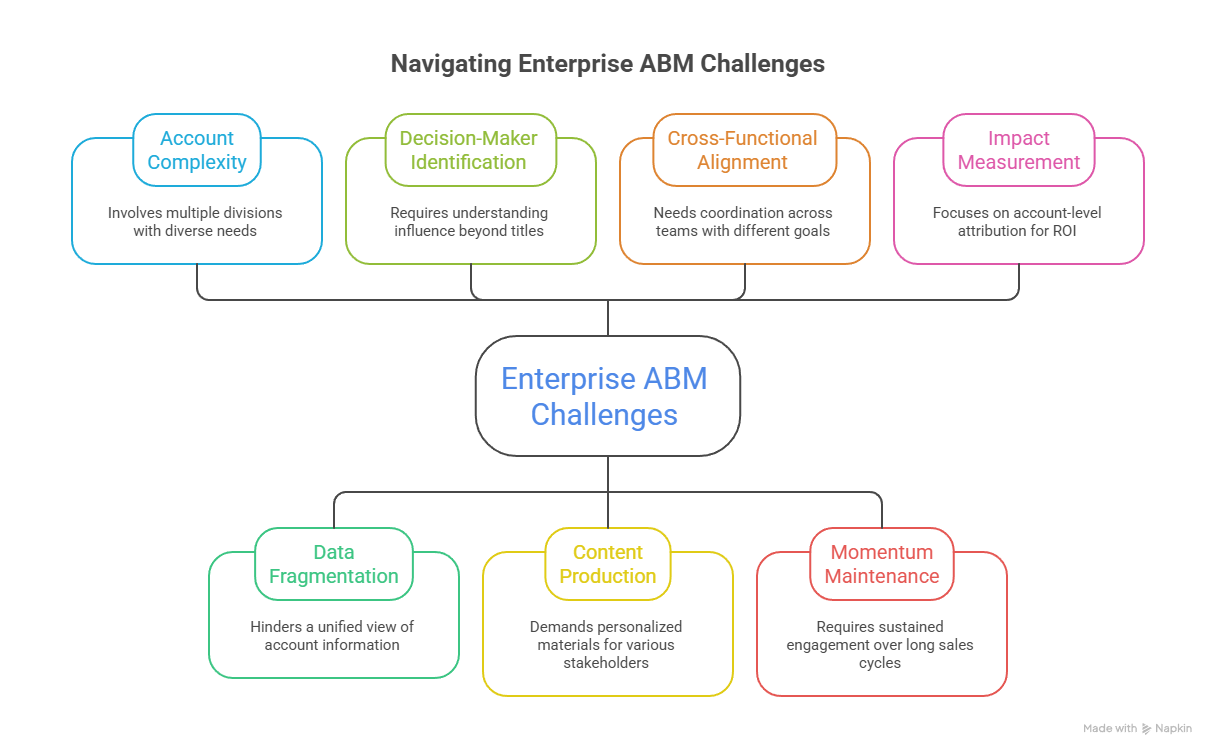
Enterprise ABM delivers outsized returns, but it also introduces complexity that smaller-scale programs never encounter. If you’re building or scaling an enterprise ABM program, these are the challenges you need to plan for.
1. Account complexity goes far beyond company size
Enterprise accounts aren’t simply larger versions of mid-market companies; they’re structurally different. Instead of a single decision-making unit, you’re working across interconnected business divisions, each with its own P&L responsibility, strategic priorities, and procurement process.
Engaging a global manufacturing firm, for example, may require simultaneously influencing a VP of Operations in North America, procurement officers in Europe, and IT leaders in Asia. Each operates within different budget cycles, reports to different executive sponsors, and evaluates vendors against different criteria.
Your messaging needs to address both the enterprise-wide strategic vision and the specific operational needs of individual divisions. A campaign that speaks only to corporate headquarters will miss the divisional leaders who often hold practical veto power over technology purchases.
2. Data fragmentation makes it difficult to see the full picture
When you’re targeting enterprise accounts, data fragmentation becomes a serious operational barrier. Your CRM might contain a partial opportunity history from one business unit. Intent data might capture research activity but fail to attribute it to the correct division. Web analytics might show traffic from the account’s IP range without connecting it to specific stakeholders or buying groups.
Without integrated data, signals get lost. An intent signal from a major financial institution could represent genuine demand from a business unit evaluating a seven-figure purchase, or it could be routine competitive research from a junior analyst. The difference is enormous, and fragmented data makes it difficult to distinguish between the two.
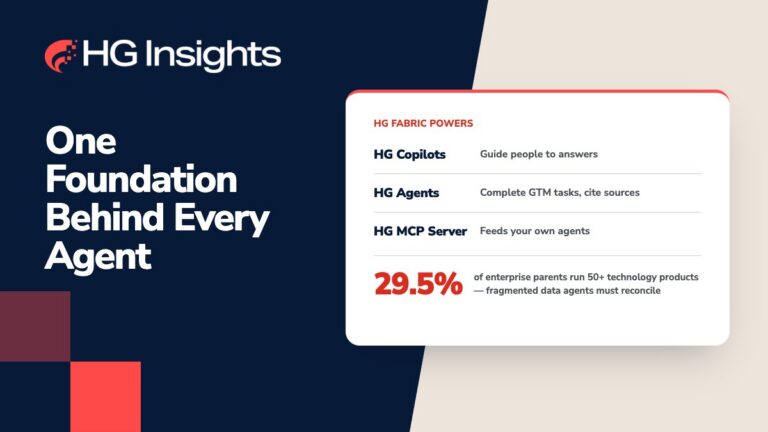
HG Insights addresses this directly: the platform tracks technology installations across more than 25,000 products, and projects 12-month rolling IT spend across 140 spend categories, updated monthly. This gives enterprise ABM teams a single account view that connects technographic, firmographic, spend, and intent signals rather than forcing teams to stitch fragmented sources together manually.
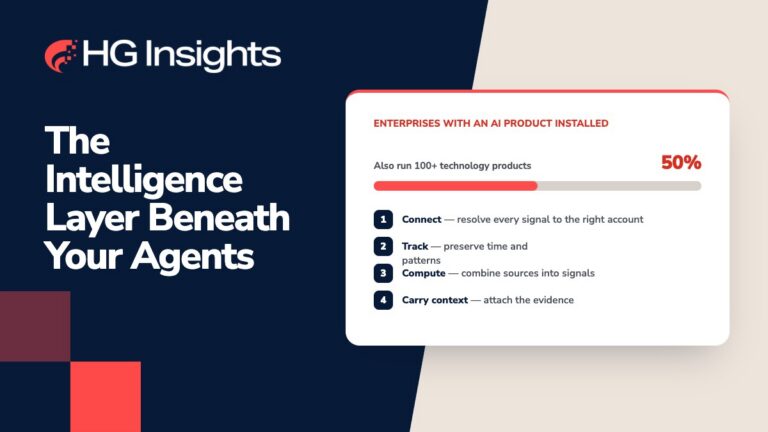
Enterprise ABM requires a unified data layer that connects CRM records, intent signals, engagement data, and organizational intelligence into a single account view. Without that foundation, even well-designed campaigns will misfire.
3. Org charts don’t tell you who actually makes the decision
Organizational charts can be deeply misleading in enterprise accounts. The person with the most senior title isn’t always the true decision-maker, and formal authority frequently diverges from actual influence.
In a typical enterprise technology purchase, the CIO may control the budget, but an SVP of Digital Transformation drives the strategic vision that determines which solutions get evaluated. A Director of Architecture holds effective veto power on anything that doesn’t meet their technical standards. A Chief Procurement Officer may negotiate final terms that reshape the entire deal structure.
Mapping these influence dynamics requires more than downloading a contact list. It takes account research, relationship intelligence, and often direct conversations with contacts inside the account who can reveal how decisions actually get made.
4. Personalization at the enterprise level is a content production challenge
In enterprise ABM, personalization goes far beyond inserting a company name into an email template. True enterprise personalization means delivering insights relevant at both the enterprise level and the individual business unit level, maintained consistently across dozens of touchpoints over months or years.
That creates a real production challenge. You need materials that address the CEO’s strategic priorities, the CTO’s technical evaluation criteria, the CFO’s total cost of ownership analysis, and end users’ daily workflow concerns, all for the same account, all reflecting a coherent narrative about your solution’s value.
Building this depth of content requires coordination between marketing, product marketing, sales, and subject matter experts. Without a structured content framework, enterprise personalization becomes unsustainable quickly.
5. Cross-functional alignment is harder than it sounds when incentives don’t match
Marketing can’t execute enterprise ABM alone. Success depends on tight coordination across teams that often operate with different metrics, compensation structures, and priorities.
Sales teams may be compensated on quarterly quotas that create tension with the long-term nurturing enterprise ABM requires. Product teams may have development roadmaps that don’t align with account-specific feature requests surfacing during the sales process. Customer success teams may prioritize retention metrics over the new revenue expansion that enterprise ABM programs are designed to generate.
Aligning these teams requires shared account plans, joint planning sessions, and executive sponsorship that reinforces the importance of cross-functional collaboration. Without that alignment, enterprise ABM fragments into disconnected activities that fail to create the coordinated experience enterprise buyers expect.
6. Keeping momentum alive across 18- to 24-month sales cycles takes deliberate strategy
Enterprise sales cycles commonly span 18 to 24 months, and during that window, everything can change. Executive sponsors leave. Budgets get reallocated. New stakeholders enter the buying committee with different priorities than their predecessors. Organizational restructuring can reshape the entire decision-making process.
Maintaining relevance across these extended timelines requires more than drip email sequences. Your team needs to continuously refresh its understanding of the account’s priorities, adapt messaging to reflect new stakeholders and shifting dynamics, and find ways to deliver value throughout the evaluation process without appearing pushy or transactional.
The goal is to remain a consistent, trusted presence so that when the account is finally ready to make a decision, your solution is deeply embedded in their thinking.
7. Measuring impact requires account-level attribution, not lead-level metrics
Traditional marketing metrics were designed for linear funnels: a lead comes in, gets qualified, moves to opportunity, and closes. Enterprise ABM rarely follows that path.
A deal might originate from a conversation at an executive dinner, gain traction through a proof-of-concept in a different division, receive budget approval from enterprise IT, and begin implementation in a completely different global region. The marketing activities that influenced the deal may have touched 15 stakeholders across four business units over 20 months.
Traditional ROI models can’t capture that complexity. Enterprise ABM requires account-level attribution that tracks engagement depth across the entire buying committee, measures progression through buying stages rather than individual lead stages, and connects marketing activities to multi-year revenue outcomes rather than single-quarter pipeline metrics.
8 best practices for enterprise ABM implementation
Building an effective enterprise ABM program requires disciplined execution across multiple dimensions. These best practices provide the framework.
1. Go deeper than firmographics when analyzing revenue potential
Look beyond top-line revenue numbers when selecting and prioritizing enterprise accounts. Map revenue distribution across business units, product lines, and geographic regions to uncover growth opportunities that surface-level data would miss.
For existing customers, analyze which divisions generate the most revenue, which have the highest growth potential, and where whitespace opportunities exist. For new target accounts, use publicly available financial data, earnings calls, and industry reports to understand how the organization generates and allocates revenue.
Connecting revenue analysis directly to your account strategy ensures your team invests the most in the accounts and business units with the greatest return potential.
2. Map the enterprise ecosystem before you launch a single campaign
Before creating any content or outreach, invest time in understanding the internal influence networks of your target accounts. Research how technology decisions flow across divisions, where purchasing authority sits versus where technical evaluation happens, and how your solution fits into publicly stated long-term growth initiatives.
This research should include analysis of annual reports, investor presentations, executive interviews, industry conference presentations, and organizational news. The goal is to build an account map that reflects not just who the people are, but how they relate to each other and what each one cares about most.
3. Make data integration and hygiene a non-negotiable foundation
Implement a unified data management approach that consolidates inputs from your CRM, marketing automation platform, intent data providers, web analytics, and sales engagement tools. Every team that touches the account should work from the same source of truth.
Data hygiene matters just as much as data integration. Enterprise accounts generate large volumes of contact and engagement data, and without regular cleaning and deduplication, your account view degrades over time. Establish processes for ongoing data validation, contact enrichment, and organizational hierarchy updates.
4. Build a tiered account strategy that matches investment to opportunity
Not every enterprise account warrants the same level of investment. A tiered framework balances depth with resource constraints:
- Tier 1: Strategic accounts. Your highest-value targets, typically five to 15 accounts that receive fully customized, one-to-one ABM programs. Each gets a dedicated account team, bespoke content, personalized events, and a detailed account plan updated quarterly.
- Tier 2: High-potential accounts. Significant revenue potential but not yet justifying full one-to-one investment. These receive semi-personalized strategies with messaging customized at the segment or vertical level, plus select one-to-one elements for senior stakeholders.
- Tier 3: Emerging enterprise accounts. Accounts that fit your ICP but are earlier in the relationship or evaluation process. They receive programmatic ABM tactics, including targeted advertising, personalized content hubs, and automated nurture sequences, that maintain visibility while you gather intelligence to determine whether they warrant tier escalation.
5. Build executive relationships by delivering value before asking for anything
In enterprise ABM, the goal extends beyond booking meetings. You’re building a position as a trusted advisor to senior leaders at your target accounts.
That means delivering value first. Share proprietary research and insights that executives can’t get from other vendors or analysts. Facilitate connections with peers at non-competing organizations facing similar challenges. Offer perspectives on industry trends that demonstrate your team’s depth of understanding beyond your own product.
Over time, this approach shifts your relationship from vendor to strategic partner, a position that dramatically increases your influence when purchasing decisions arise and creates a competitive advantage that rivals struggle to displace.
6. Segment accounts by maturity, potential, and geographic presence
Within your enterprise account portfolio, not all accounts share the same characteristics. Segmenting by three dimensions allows you to develop value propositions that resonate with each group while maintaining content production efficiency:
- Organizational maturity. How sophisticated is their current approach to the problem you solve? Accounts with mature operations require different positioning than those still building foundational capabilities.
- Revenue potential. What is the realistic total contract value across all business units? This determines the level of investment each account justifies.
- Geographic presence. Where do their operations create implementation complexity or expansion opportunity? Multi-region accounts often present both challenges and additional revenue paths.
7. Apply intent data at both the portfolio level and the individual account level
Intent data is most powerful in enterprise ABM when used at two scales simultaneously.
At the portfolio level, analyze intent trends across your full account set to identify broader industry shifts, emerging pain points, and category-level interest that may signal new opportunities. This intelligence informs your content strategy and helps you anticipate where demand is heading.
At the individual account level, monitor account-specific behaviors to tailor immediate outreach. When a target account suddenly increases research activity around a topic your solution addresses, that signal should trigger coordinated outreach from marketing and sales within days, not weeks.
HG Insights’ Buyer Intent data draws on second-party signals from TrustRadius (acquired June 2025), one of the few intent sources tied to verified, purchase-confirmed behavior, layered with technographic and spend context. That combination separates in-market accounts that are genuinely qualified from those that are merely browsing.
8. Build a content matrix that matches each stakeholder’s role and preferences
Content personalization in enterprise ABM must reflect both the account’s situation and the individual stakeholder’s role, priorities, and preferred format:
- Technical evaluators (CTOs, Directors of Architecture) typically prefer detailed technical whitepapers, architecture diagrams, and security documentation.
- Financial decision-makers (CFOs, procurement leaders) respond to budget-focused proposals, TCO comparisons, and contract flexibility options.
- Business unit leaders connect with case studies from similar organizations, ROI projections, and executive briefings.
Mapping each stakeholder persona to their preferred topics and formats ensures that every piece of content your team produces serves a specific purpose within the broader account strategy.
How to measure enterprise ABM success
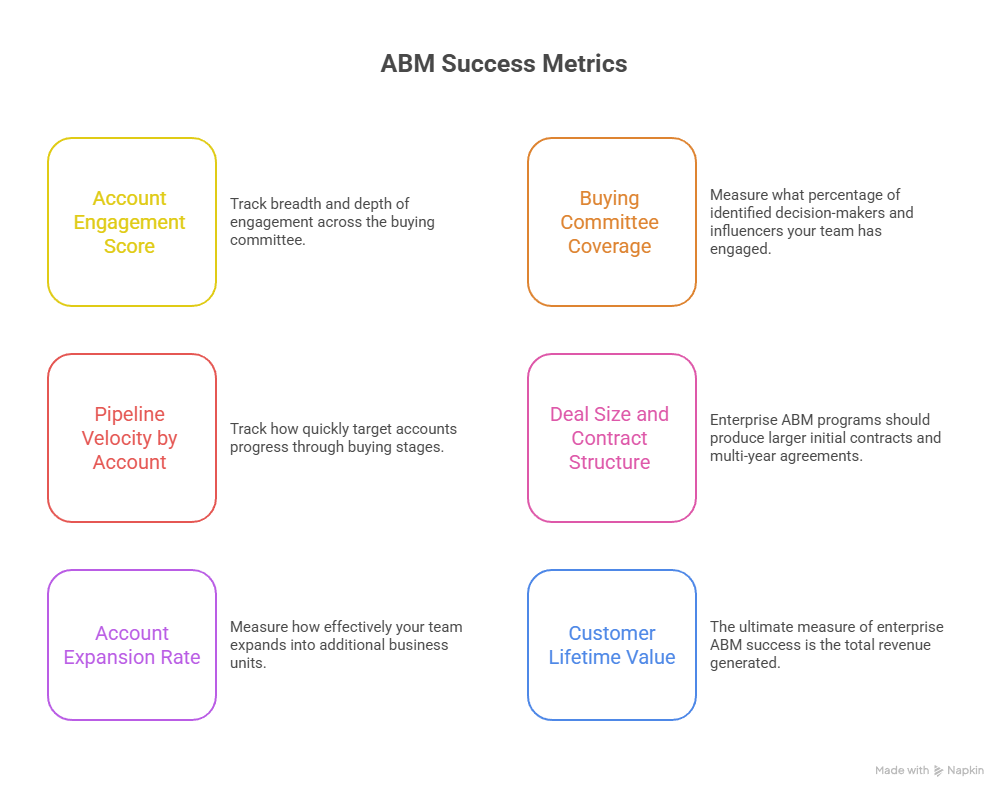
Traditional marketing metrics aren’t built for the way enterprise ABM generates revenue. The following measurement framework captures account-level impact:
- Account engagement score. Track breadth and depth of engagement across the buying committee. Are you reaching more stakeholders over time? Is engagement deepening from passive content consumption to active conversations and meetings?
- Buying committee coverage. Measure what percentage of identified decision-makers and influencers your team has engaged. A deal where you’ve reached two of eight committee members carries significantly more risk than one with relationships across the full group.
- Pipeline velocity by account. Track how quickly target accounts progress through buying stages. Enterprise ABM should demonstrably accelerate movement from awareness to evaluation to decision, even when the absolute timeline remains long.
- Deal size and contract structure. Enterprise ABM programs should produce larger initial contracts and multi-year agreements compared to accounts acquired through non-ABM channels.
- Account expansion rate. After the initial purchase, measure how effectively your team expands into additional business units, geographies, and use cases within the account. This is often where enterprise ABM delivers its highest long-term ROI.
- Customer lifetime value. The ultimate measure of enterprise ABM success is the total revenue generated from an account relationship over its full duration, including renewals, expansions, and referrals.
Power your enterprise ABM strategy with the right intelligence foundation
Enterprise ABM demands precision at every stage, from account selection and stakeholder mapping to personalized engagement and long-term measurement. The difference between programs that deliver outsized returns and programs that stall often comes down to the quality of the intelligence underneath them.
HG Insights gives B2B teams the technology intelligence to identify, prioritize, and engage enterprise accounts with confidence. From mapping a target account’s full technology stack to uncovering whitespace opportunities across business units and geographies, HG Insights provides the unified data foundation that enterprise ABM programs require.
Put the right intelligence behind your enterprise ABM strategy. See how HG Insights powers enterprise ABM from account selection through activation.