
Competitive knowledge usually exists somewhere inside your GTM motion. It lives in call notes, win-loss feedback, Slack threads, sales objections, review sites, and the gut feel of your best reps.
The problem is that scattered intelligence rarely turns into repeatable action. A rep spots a displacement opportunity too late. Product marketing updates positioning after the market has already shifted. The knowledge exists, but it never reaches the field in a form anyone can use.
A solid competitive intelligence framework gives your team a cleaner path from anecdotal awareness to consistent competitive wins. Here is what that framework looks like, step by step.
Why B2B competitive intelligence needs a framework
Ad hoc competitor research creates uneven visibility. One team tracks messaging. Another tracks win rates. Sales hears the same competitor objections every week, but those insights may never reach strategy, RevOps, or product marketing in a usable format.
A defined competitive intelligence process gives your team a shared operating rhythm. It clarifies what to track, where the data should come from, how insights get validated, and how they reach the field.
Research from Crayon found that sellers compete head-to-head in 68% of deals, yet teams rate their competitive selling readiness at only 3.8 out of 10. A gap that wide turns competitor awareness into missed revenue.
HG Insights tracks more than 100,000 technologies and combines install data with renewal timing and buying intent signals, giving teams the account-level view to move from anecdotal competitive awareness to consistent action.
Step 1: Define your competitive scope
Start by deciding which competitors deserve active tracking. Direct competitors are obvious, but a complete market view also accounts for indirect alternatives, substitute solutions, and changing customer priorities. Adjacent vendors, legacy incumbents, emerging category players, and point solutions can all shape a buyer’s decision.
Scope should connect to your ICP. A rival might be a serious threat in enterprise healthcare accounts while barely appearing in mid-market software. Segment, region, product category, company size, and use case should guide which competitors get the closest attention. Trying to track everyone equally is how teams end up tracking no one well.
Step 2: Source the right data signals
A useful competitor research methodology combines internal insights, outside market signals, and account-level detail into a clearer view of competitive position.
Public signals such as reviews, job postings, competitor websites, analyst commentary, and press releases add context. They show shifts in messaging, product direction, hiring priorities, and customer sentiment.
But public signals can’t carry the whole process. Your team also needs technographic install data, contract intelligence, firmographics, spend indicators, and intent data. Those signals answer the revenue questions that matter: which accounts use a competitor, which contracts are nearing renewal, and which buyers are actively researching alternatives. Strong B2B data enrichment for competitive precision moves your team from broad market assumptions to account-level decisions.
Step 3: Map competitor install bases
Technographic competitor data shows where rival products are already installed. By identifying the accounts running a competitor’s solution today, your team gets a practical starting point for competitive displacement analysis.
HG Insights uses behind-the-firewall detection to surface competitor deployment signals that standard web-crawl analysis misses, revealing not just whether a rival product is installed, but how intensively it’s deployed across an organization and whether usage is growing or contracting.
Install base mapping also shows how competitor footprints change over time. Growth in one segment can reveal where a rival is gaining traction. A decline in another can indicate dissatisfaction, budget pressure, or replacement cycles. Sales can use that account context to sharpen outreach, and product marketing can use it to refine positioning against specific competitors.
Step 4: Analyze market share and segment strength
B2B competitive analysis gets more reliable when you view market share at the segment level. Total competitor presence is useful, but density by industry, region, revenue band, or technology environment tells a better story.
Your team might find that a competitor dominates one vertical and struggles in another. Or that it holds heavy install presence among enterprise accounts but little strength in fast-growing mid-market segments. Those patterns help your team find whitespace, prioritize takeout plays, and focus messaging where your value proposition has the clearest opening. A solid competitive analysis and takeout strategy connects B2B market intelligence directly to revenue execution.
Step 5: Monitor competitive signals continuously
Competitive signal tracking should run year-round. Quarterly research snapshots go stale fast, especially when buyer behavior, vendor positioning, and renewal timelines keep moving.
Useful signals include contract expirations, new technology installs, product removals, hiring shifts, intent spikes, funding events, review trends, and competitor mentions in sales calls. Fresh signals help your team catch churn risk, displacement openings, and active buying windows before they show up clearly in pipeline reporting.
Step 6: Translate insights into sales plays
A competitive intelligence strategy creates value when it changes what sales and marketing do next. Validated insights should feed battlecards, objection handling, outbound messaging, account-based campaigns, and win-back motions.
A displacement play might target accounts using a competitor with known fit issues. A win-back play might reengage closed-lost accounts when intent activity suggests renewed interest. A defense play might flag current customers showing competitor research activity. Account-specific data gives reps a better reason to engage and a stronger way to frame the conversation, and it can fuel AI-driven sales plays for competitive scenarios when teams need to scale personalized outreach.
Step 7: Score and prioritize competitive accounts
Competitor account targeting works best when accounts are ranked by revenue potential, not just competitor presence. A competitor install on its own doesn’t make an account worth pursuing.
RevOps should combine ICP fit, current technology stack, contract timing, intent activity, estimated spend, segment strength, and prior engagement. Scoring helps reps focus on the accounts where competitive effort is most likely to pay off, and it keeps displacement campaigns focused, measurable, and aligned with territory capacity.
Step 8: Measure outcomes and refine the framework
A win-loss analysis framework gives your team the feedback loop it needs to improve competitive execution. Track win rates by named competitor, deal velocity, displacement pipeline, competitive revenue won, battlecard usage, sales play adoption, and closed-lost reasons.
Results should feed back into the process. Strong segments earn deeper focus, weak plays get revised, and fresh competitor objections update enablement. Competitive intelligence gets sharper when every deal teaches the system something.
How HG Insights powers competitive intelligence at scale
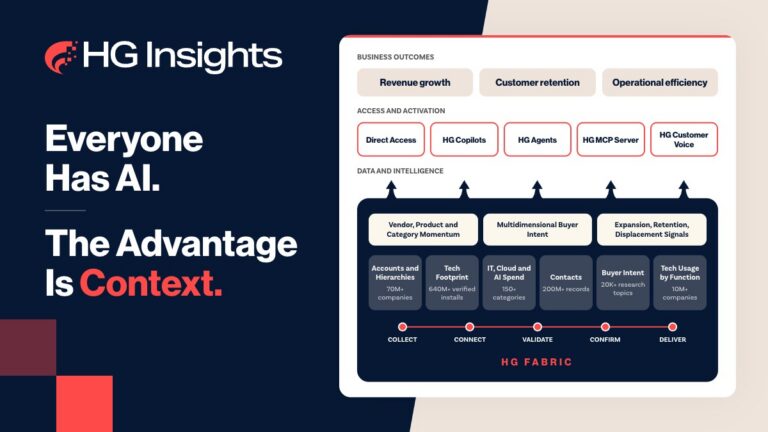
HG Insights gives GTM teams the data foundation to support each step of the framework. With technographic, contract, market, spend, and intent intelligence, your team can identify competitor installs, size market opportunities, prioritize displacement accounts, and act on buying signals with greater precision.
Our RGI Platform for competitive intelligence helps strategy, RevOps, product marketing, and sales work from the same account-level view. A competitive intelligence framework becomes far more reliable when every team can connect market signals to the accounts, plays, and revenue motions that matter.
Competitive intelligence shouldn’t live in scattered anecdotes or stale battlecards. With the right competitor analysis steps, the right process, and the right data, your team can turn B2B competitive analysis into a repeatable path for sharper targeting, stronger positioning, and better pipeline execution.
See how HG Insights identifies competitor accounts and times displacement campaigns.
Frequently asked questions
What is a B2B competitive intelligence framework?
A B2B competitive intelligence framework is a repeatable process for gathering, validating, and acting on information about competitors. It defines which rivals to track, which data signals to source, how to analyze market share and install bases, and how to turn findings into sales plays, account prioritization, and measurable revenue outcomes. The goal is to replace scattered, anecdotal competitor knowledge with a continuous, decision-ready system.
Why do B2B companies need a structured approach to competitive analysis?
Ad hoc research produces uneven visibility, where different teams track different things and insights rarely reach the field in time. A structured approach gives everyone a shared rhythm for what to track, where data comes from, and how it gets used. That matters because sellers compete head-to-head in most deals, and readiness gaps translate directly into lost revenue.
What data sources are most valuable for competitive intelligence?
The strongest programs combine public signals with account-level intelligence. Reviews, job postings, analyst commentary, and press releases provide context on messaging and direction. Technographic install data, contract intelligence, firmographics, spend indicators, and intent data answer the revenue questions: which accounts run a competitor, which contracts are nearing renewal, and which buyers are researching alternatives. Public signals add color, but account-level data drives decisions.
How do technographic and install data support competitive displacement?
Technographic data shows which accounts run a competitor’s product today, giving your team a concrete list of displacement targets. Install base mapping also tracks how a competitor’s footprint shifts over time, where growth signals traction and decline signals dissatisfaction or replacement cycles. Layering contract timing on top reveals which of those accounts are approaching a renewal window where a switch becomes realistic.
How can sales teams use competitive intelligence in their daily plays?
Validated competitive data feeds battlecards, objection handling, outbound messaging, account-based campaigns, and win-back motions. A displacement play targets competitor accounts with known fit issues, a win-back play reengages closed-lost accounts showing renewed intent, and a defense play flags current customers researching competitors. Account-specific data gives reps a stronger reason to engage and a sharper way to frame the conversation.
What metrics should B2B teams track to measure competitive intelligence success?
Track win rates against named competitors, deal velocity, displacement pipeline, competitive revenue won, battlecard usage, sales play adoption, and closed-lost reasons. These metrics show whether competitive intelligence is changing outcomes rather than just informing them. Feeding the results back into scoring, plays, and segment focus is what sharpens the framework over time.
How does HG Insights support competitive intelligence and analysis?
HG Insights delivers technographic, contract, market, spend, and intent intelligence that supports every step of the framework, from identifying competitor installs to sizing opportunities, prioritizing displacement accounts, and acting on buying signals. The Revenue Growth Intelligence Platform gives strategy, RevOps, product marketing, and sales a shared, account-level view so competitive intelligence connects directly to the plays and revenue motions that matter.