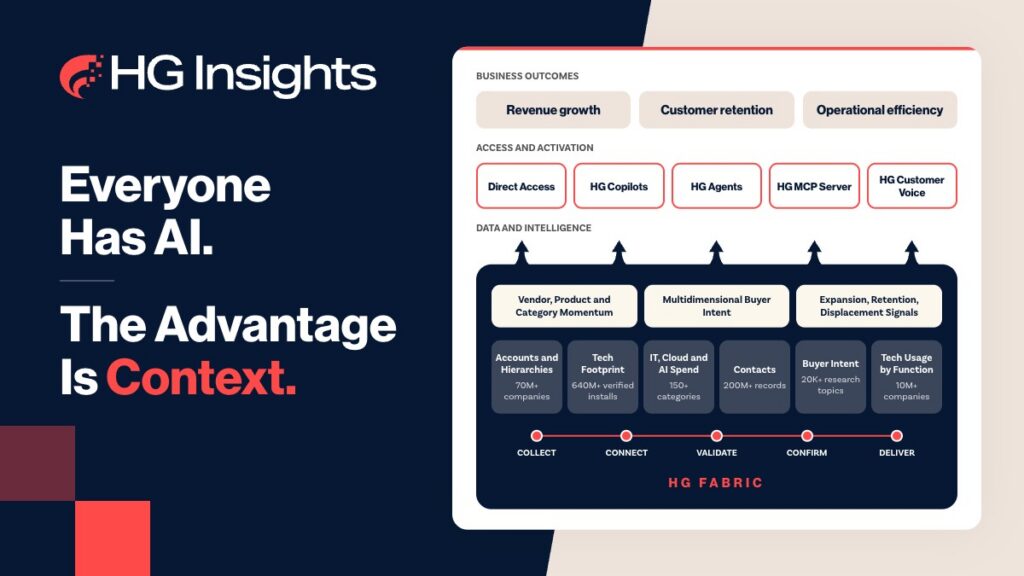
On October 6, we launched our Contextual Intelligence Platform. Here is why I think this launch matters to you.
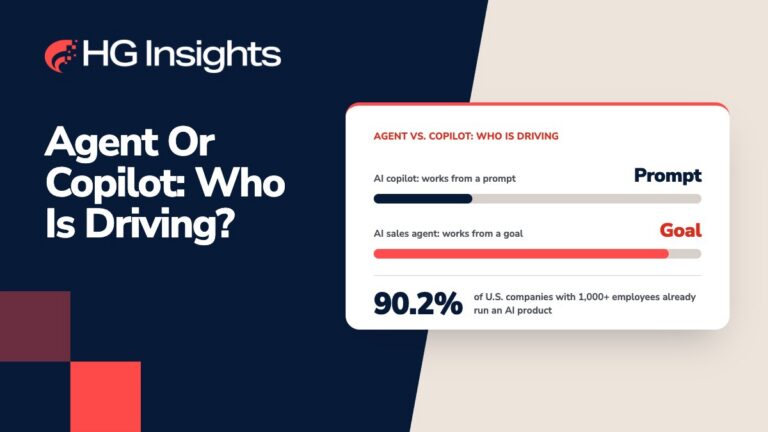
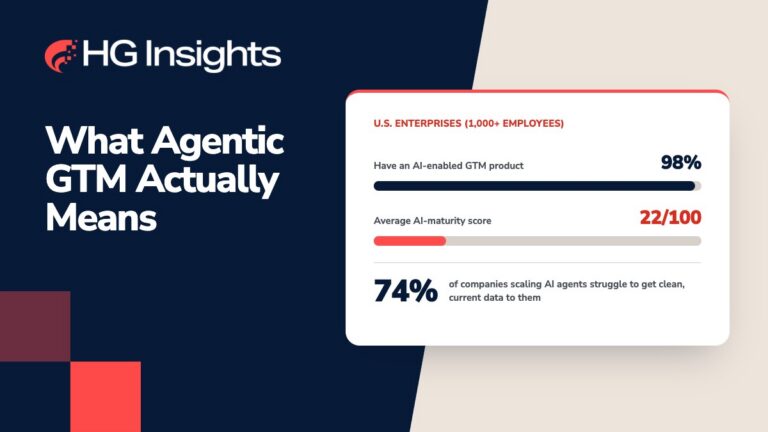
Every customer I speak with is investing in AI to improve GTM productivity and ultimately exceed their revenue growth plans. The speed of adoption is astonishing. Teams are using AI to research accounts, score opportunities, build campaigns, and do volume outreach. Increasingly, they are asking agents to automate that work.
But if all companies adopt the same tools, use the same AI models, and draw on the same generic, publicly available data, how will they differentiate from one another?
I believe the advantage will come from understanding your markets, accounts, and buyers better than your competitors do, and putting that knowledge to work. Access to AI alone won’t give you that.
Why AI needs context
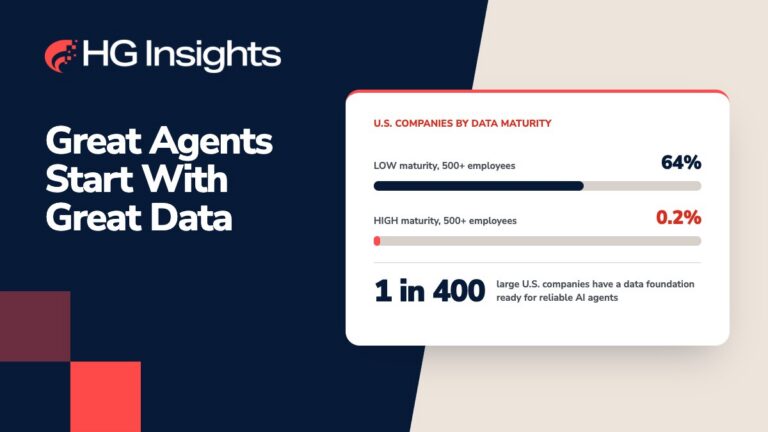
I’ve seen organizations aggregate more data sources or larger volumes of data and expect AI to work out how to size their market correctly, identify their ICP accurately, score their target accounts precisely, and find opportunities their sellers can trust.
But each data source tells only part of the story. Putting them all within reach of an agent doesn’t mean the agent has what it needs to make the right call.
One source tells you an account is researching a product. Another tells you what technology it already uses. Unless those facts are connected and interpreted together, how does an agent know whether it has found a new customer opportunity, an expansion opportunity, or a competitive displacement opportunity?
The same buyer research activity can mean very different things. An account researching a category where it has no technology footprint may be considering its first purchase. An existing customer researching your product may be looking to expand. An account running a competitor’s product may be evaluating alternatives.
Treat those accounts the same, and you’re sending sellers into three different conversations with the same play.
Corporate hierarchies matter too. If a subsidiary’s spending is disconnected from its parent, a market analysis can miss or double-count that spend. If the same company appears under several names, your target list can look bigger without there being any more opportunity.
We’re feeding AI isolated data sources and expecting it to figure out the relationships we haven’t established ourselves. Then we’re asking it to prioritize accounts, recommend sales plays, and execute them. That’s a lot of confidence to place in an incomplete picture.
When it gets those decisions wrong, we waste resources, send sellers after the wrong opportunities, and worse, put the credibility of our GTM teams on the line. Automate that across thousands of accounts, and the mistakes scale too.
AI needs context to be accurate. We can’t skip that work and expect AI to fill in the gaps.
Understanding what is changing
This is where the hard work is. The company identities have to match. The corporate hierarchy has to be right. Technology, spend, and buyer activity have to resolve to the same account, and you have to track what changes over time. Get those relationships wrong, and everything built on top of them inherits the problem.
There’s real data science behind this. We collect global signals and use AI, machine learning, and natural language processing to extract and connect evidence about technology usage to the right accounts. We cross-reference that evidence and score our confidence, combining automated approval with expert review before delivering the intelligence.
Then the cycle continues. Companies change, technologies get replaced, and buying activity moves on. Keeping the intelligence fresh means continually collecting, connecting, and validating new observations. Agents can make the wrong call with data that used to be right. There’s work in keeping that picture accurate as the business changes.
HG has spent more than a decade working on this. Our technology and spend intelligence, together with verified buyer signals from TrustRadius, gives us a foundation for connecting those pieces. Buying-center intelligence helps identify the department that owns a technology, so teams can move from knowing what an account runs to understanding who they need to engage. That picture also needs the customer’s own account data, so recommendations reflect the relationships and activity already in their business.
That history also tells you more than what needs updating. It reveals where adoption is accelerating or slowing, which products are gaining or losing ground, and how those shifts vary across accounts and markets.
A large installed base can hide slowing adoption. A smaller competitor can be picking up speed. If you’re deciding where to invest or which competitor to displace, you need to see that movement. A static account list alone won’t tell you. You need the history, the pace of adoption, and the spending and buyer activity alongside it.
That changes how you assess an opportunity. You can see where a competitor’s position may be weakening, where demand is building, and where your assumptions about a market need another look.
People need this understanding. The AI agents acting on their behalf need it even more!
Putting that intelligence to work
This intelligence sits at the heart of our platform in HG Fabric. With this launch, we’ve expanded it with funding intelligence, buying-center contacts, broader account coverage, and a new intelligence layer we call Momentum, tracking how vendor and product footprints are changing and where adoption is picking up or slowing down.
We also introduced more ways for customers to use it. The intelligence has to reach the people and agents doing the work.
HG Agents automate complex GTM tasks and deliver ready-to-use, source-cited outputs, including account briefs, buying-committee maps, target lists, and personalized outreach. HG Superagent selects and coordinates the specialist agents needed to complete the work.
The evidence matters. A polished account brief isn’t enough if a seller can’t check the claims behind it. Teams can examine the sources and understand what they’re acting on.
HG MCP Server brings the same intelligence into customers’ own agents and AI applications. Through the Model Context Protocol, those applications can access HG intelligence, research, and curated workflows within the environments customers already use. They can also invoke HG Agents and query Fabric for custom analysis.
We’ve enhanced HG Copilots with predictive scoring across Fit, Need, and Intent. If we rank an account highly, the team should be able to inspect why. Which signals contributed? How were they weighted? What happens if the team changes those weights?
We expose that logic and let teams adjust it. They’re the ones who have to defend the priorities and execute against them.
Our updated Sales Copilot applies that intelligence to each customer’s products, buyers, and sales motions. A seller sees a ranked account list with supporting research, buyer signals, a recommended sales play, a product pitch, and buying-committee contacts, with clear reasoning behind the recommendations.
The same account can be a priority for one product and a poor fit for another. Guidance has to reflect what the seller is actually trying to sell and the problem it addresses. Otherwise, we’re asking the seller to do the contextual work all over again.
Customers will use different models, agents, and applications across their businesses. They shouldn’t have to rebuild their GTM intelligence every time they choose another tool. HG Fabric provides a common foundation they can use through HG Copilots, HG Agents, and the applications they build themselves.
What comes next
As more GTM work is automated with AI, we can’t afford to compromise the intelligence powering those systems. We’re trusting them with decisions that affect pipeline, revenue, and customer relationships.
I believe the advantage will belong to companies that understand their markets and buyers better and put that understanding to work consistently across their business. This launch is a big step in how we help our customers do that.
I’m proud of the team that brought this platform to life, and I’m looking forward to seeing what our customers do with it.
Author
-
 Chief Executive Officer, HG InsightsRohini Kasturi is a distinguished C-Suite executive, board member, and trusted advisor to numerous private equity and venture capital firms. An alumnus of Harvard and Stanford, he has profoundly impacted the growth trajectories of various public, private, and venture-backed companies.His pioneering efforts in the hybrid cloud market since early 2010, coupled with his expertise in scaling SaaS businesses in data, security, and more, have solidified his reputation as a respected leader and trusted advisor, and earned him numerous accolades and over 20 patents.Kasturi was pivotal as EVP and Chief Product Officer at SolarWinds, a renowned IT management software company. He managed product development, engineering, product marketing, strategic alliances, portfolio management, and several other functions, transforming the company’s structure towards a Platform model and achieving remarkable year-over-year growth in key business metrics.His professional journey includes a significant tenure at Pulse Secure as the Chief Product and Development Officer. Here, he doubled the company’s bookings by innovating the Zero-Trust Security Portfolio and played a critical role in its acquisition by Ivanti. Before this, as the VP/GM of Cloud and Data Management business unit at Veritas Technologies, he launched the first multi-cloud data and information management SaaS platform, demonstrating his forward-thinking approach. He is also the founder/CEO of Avni.io, a venture in cloud virtualization technology, which Veritas later acquired.With more than two decades of technical achievement and business acumen in the B2B tech industry, Rohini Kasturi continues to foster leadership through empathy and accountability, and to drive innovation across SaaS, cloud, data analytics, and AI/Agentic technologies.