

HG Customer Voice, powered by TrustRadius
B2B buyers read peer reviews and query AI answer engines long before a vendor hears from them. HG Customer Voice, powered by TrustRadius gives go-to-market teams the verified proof, the buyer signals, and the visibility measurement that stretch of the buying cycle demands.
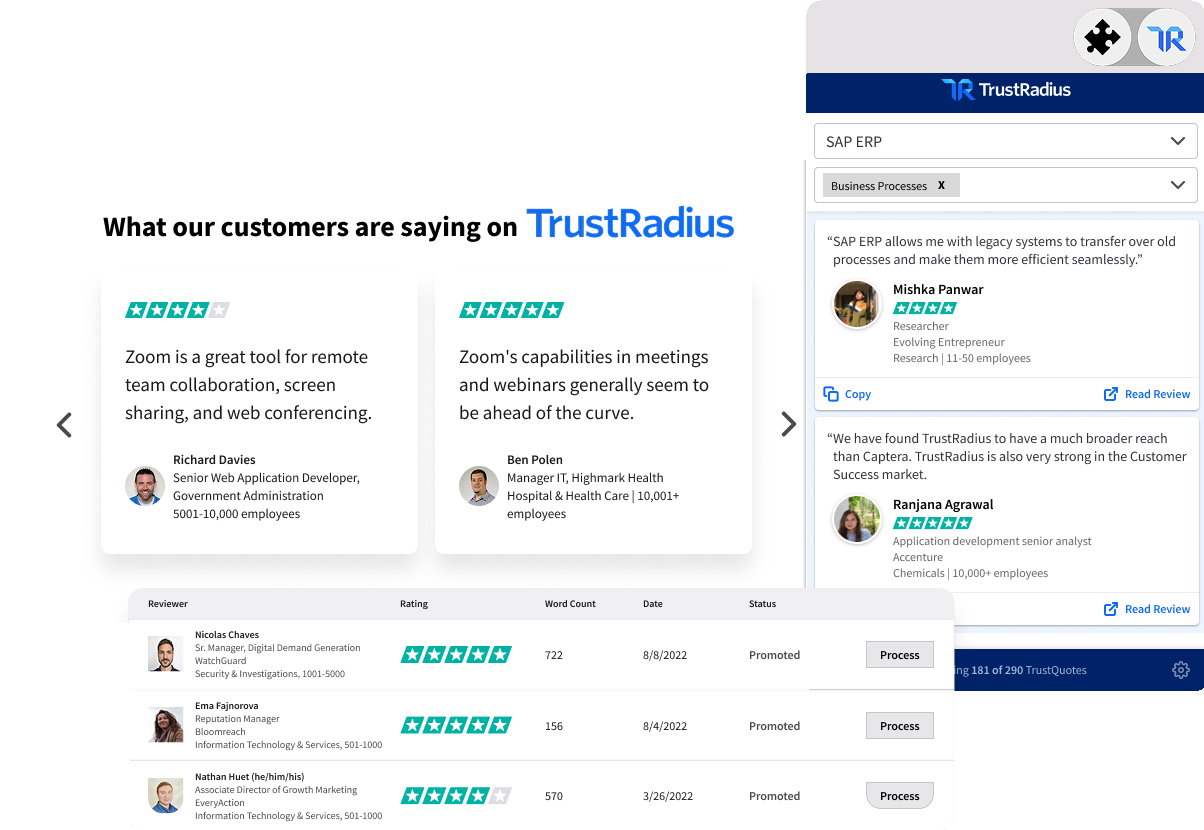
HG Customer Voice, powered by TrustRadius is a customer advocacy and buyer intelligence capability of the HG Insights Contextual Intelligence Platform. The capability collects verified product reviews, syndicates that proof across go-to-market channels, delivers TrustRadius Buyer Intent, and monitors AI answer engine citation for product marketing, demand generation, and competitive intelligence teams.
What problems does HG Customer Voice solve?

Third-party proof is slow and expensive to produce
Credible customer stories take coordination across customer success, legal, and marketing. A single case study absorbs weeks of team time, so most vendors ship a handful a year and leave the rest of the portfolio without independent evidence.
Thin review coverage costs deals
Buying committees discount vendor claims and look for peer evidence instead. A sparse review profile reads as a risk signal, lengthens diligence, and leaves a vendor absent from shortlists buyers build by filtering on industry, company size, and use case.
Campaigns run without evidence buyers trust
Paid search, outbound sequences, and account-based programs underperform when the landing experience carries only vendor assertions. Quotes sit in a review platform with no governed path into the pages and sequences where conversion happens.
AI answer engines recommend vendors invisibly
Generative engines assemble shortlists directly for buyers, drawing on third-party pages rather than vendor sites. Most vendors cannot see whether those answers name them, cite them, or route the buyer to a competitor, so the channel stays unmanaged.
What does HG Customer Voice do?
Review generation
Custom questionnaires and structured review campaigns source reviews from verified users, with each submission checked for work identity and product relationship, then cleared by human moderation and fraud screening before publication.
Verified review volume changes what a vendor can claim and where a vendor appears. Ten published reviews in a category within the award window qualifies a product for TrustRadius Top Rated and Buyer's Choice recognition, and a deeper review set widens the filters, segments, and comparison pages a product surfaces on during evaluation.
Proof syndication
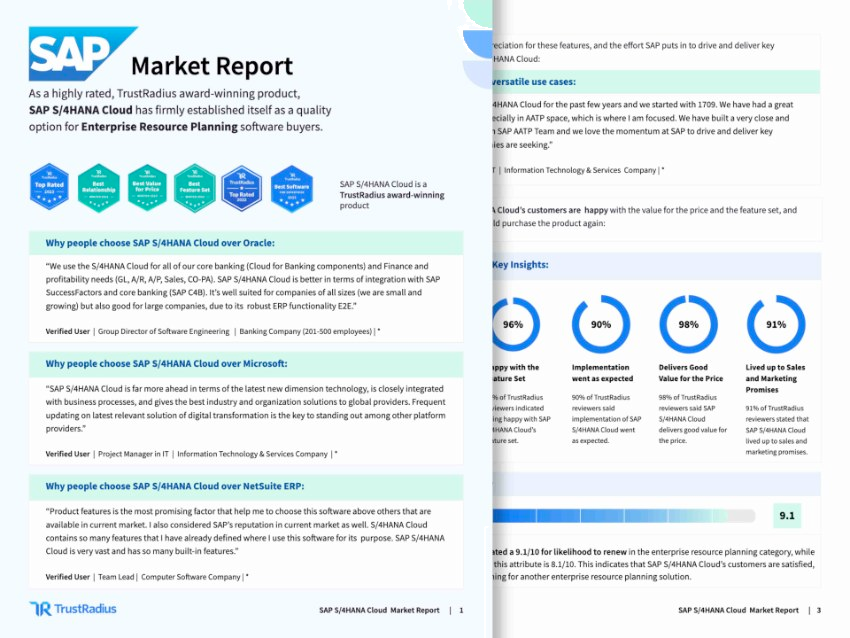
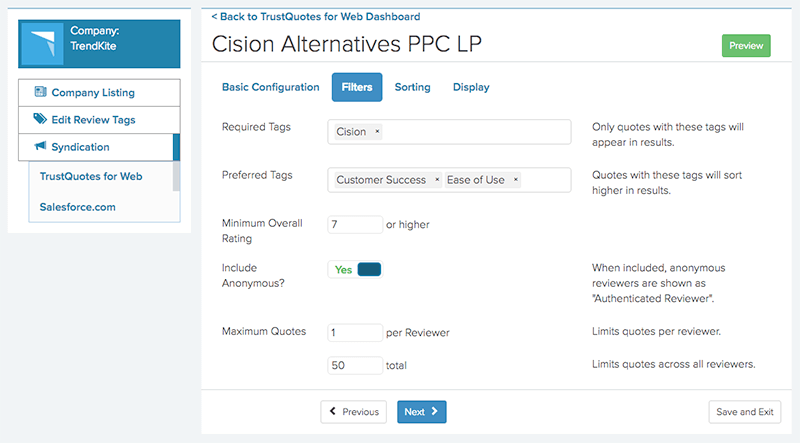
TrustQuotes and site widgets push tagged quotes, ratings, and review excerpts into web pages, landing pages, campaigns, and sales assets, matched to brand styling and refreshed automatically as reviews publish.
Syndication moves evidence from a review profile to the page where a buyer decides. Marketing teams drop dynamic review blocks into pages without developer work, sellers pull quotes tailored to a persona or use case, and every placement stays current as the underlying review set grows.
Advocacy and reference management
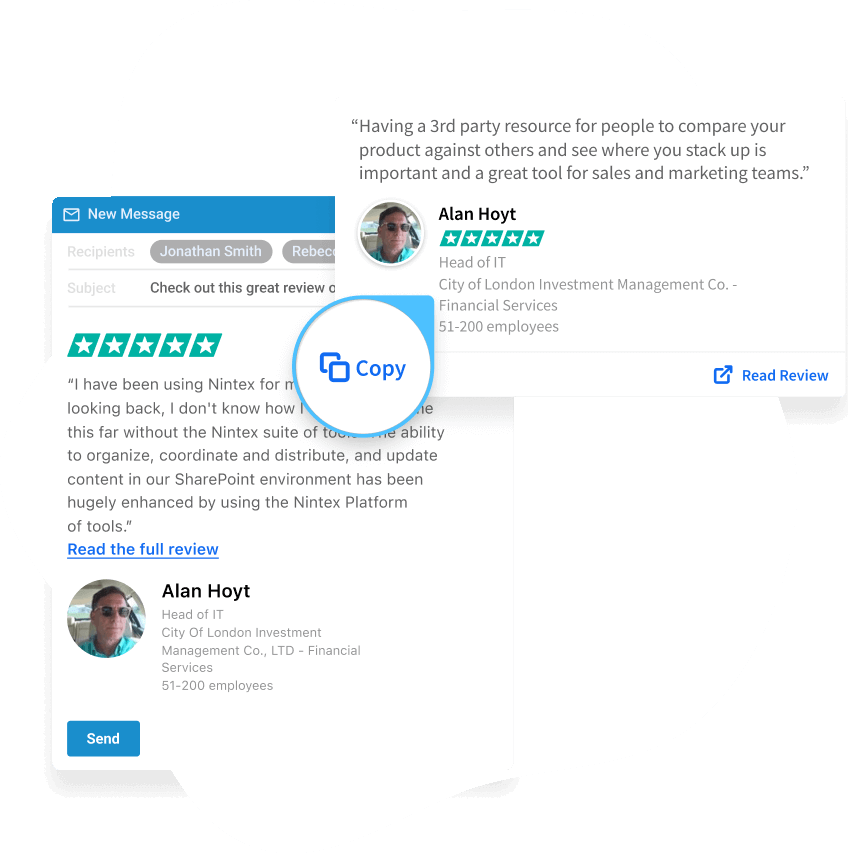
Centralized collection, curation, and tagging cover every product and segment, with tools to identify, approve, and route advocates for calls, quotes, and studies, and usage rights governed per asset.
Governed usage rights are what let a marketing team reuse a quote at speed without a legal review for each placement. Reference routing turns advocate selection from a manual ask into a managed queue, so the same named customers stop absorbing every reference call in a quarter.
Buyer intent delivery
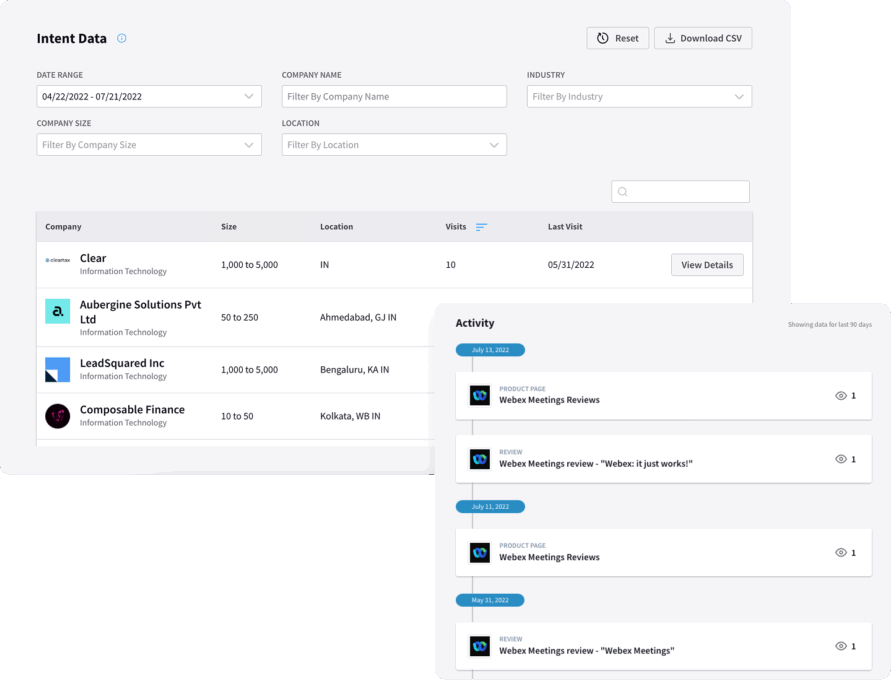
TrustRadius Buyer Intent arrives in two forms: Category Intent, an upper-funnel view of accounts researching a category or a competitor, and Product Intent, a lower-funnel view of accounts on a specific product profile or comparison page.
TrustRadius Buyer Intent is first-party behavioral data from a research destination, so an account showing Product Intent is already in evaluation. Layered against HG install and technographic data, the same signal separates a white space account from an expansion account or a competitive displacement target.
AI visibility monitoring
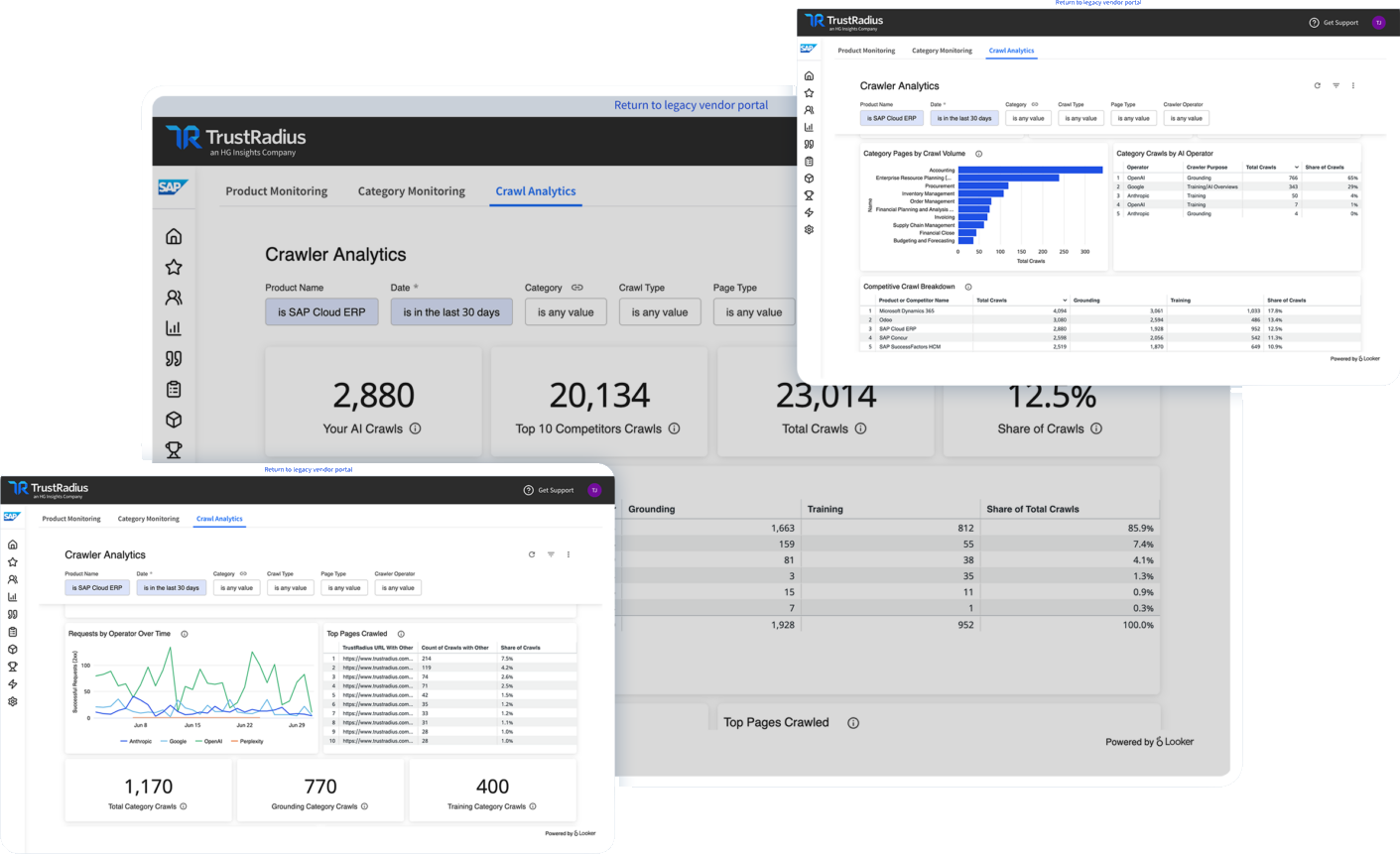
The GEO Monitoring Dashboard reports which AI crawlers pull a vendor's TrustRadius pages and how often, tracks AI Share of Voice against named competitors, and monitors how answer engines respond to real buyer prompts in a category.
Measurement turns AI search from an unobserved channel into a managed one. Across the 90 days to September 2026, AI crawlers made 2,067 successful requests to HG Insights' own TrustRadius pages, and 1,333 of those requests were made to ground a live answer rather than to train a model.
How does HG Customer Voice work?
Review campaigns and questionnaires invite existing users to submit structured feedback on use cases, implementation, and outcomes. TrustRadius verifies each reviewer by work identity and product relationship, then moderates the submission. Publication typically follows three to five business days after submission. In parallel, research activity on product, category, and comparison pages accumulates as buyer intent.
Published reviews, ratings, and buyer research activity flow into HG Fabric, where those records resolve to the same company identities and corporate hierarchies as HG install, spend, and firmographic intelligence. HG Fabric returns HG product intelligence to TrustRadius product pages, broken out by department, role, company size, geography, and product function.
Quotes and ratings syndicate through TrustQuotes and widgets into the content management system and customer relationship management systems a team already runs. Category Intent and Product Intent route to Salesforce, 6sense, Demandbase, ZoomInfo, and LinkedIn. The GEO Monitoring Dashboard reports crawler activity, AI Share of Voice, and prompt-level answer coverage.
Each stage depends on the stage before. Unverified reviews carry no weight with a buying committee, buyer signals with no install context cannot separate a displacement play from an expansion play, and visibility measurement with no published content gives a team nothing to act on.
What does HG Customer Voice support?
Work identity and product relationship checks, human moderation, and fraud screening on every submission.
Three to five business days from submission, longer during high queue volume.
10 published reviews per category within the window. Buyer's Choice runs January through September; Top Rated runs June through the following April.
TrustQuotes and site widgets with brand styling, tag-based selection, and automatic refresh.
Advocate identification, approval, routing, and per-asset usage rights governance.
Upper-funnel signal covering category research, competitor pages, and comparison pages, delivered as a weekly file.
Lower-funnel signal showing the path an account took through a product profile, available in the vendor portal.
Salesforce, 6sense, Demandbase, ZoomInfo, LinkedIn.
Request volume by operator and bot for OpenAI, Google, Anthropic, and Perplexity, split by grounding and training purpose.
AI Share of Voice against named competitors, plus prompt-level coverage across ChatGPT, Claude, Google AI Overviews, Microsoft Copilot, and Perplexity.
Not offered. TrustRadius sells no sponsored or pay-per-click placement in category listings.
Which use cases does HG Customer Voice support?
Source verified reviews on the capabilities and outcomes a category cares about, then move the strongest quotes and ratings into web pages, nurture programs, and seller materials under governed usage rights. The outcome is higher landing page conversion and shorter diligence cycles.
Learn More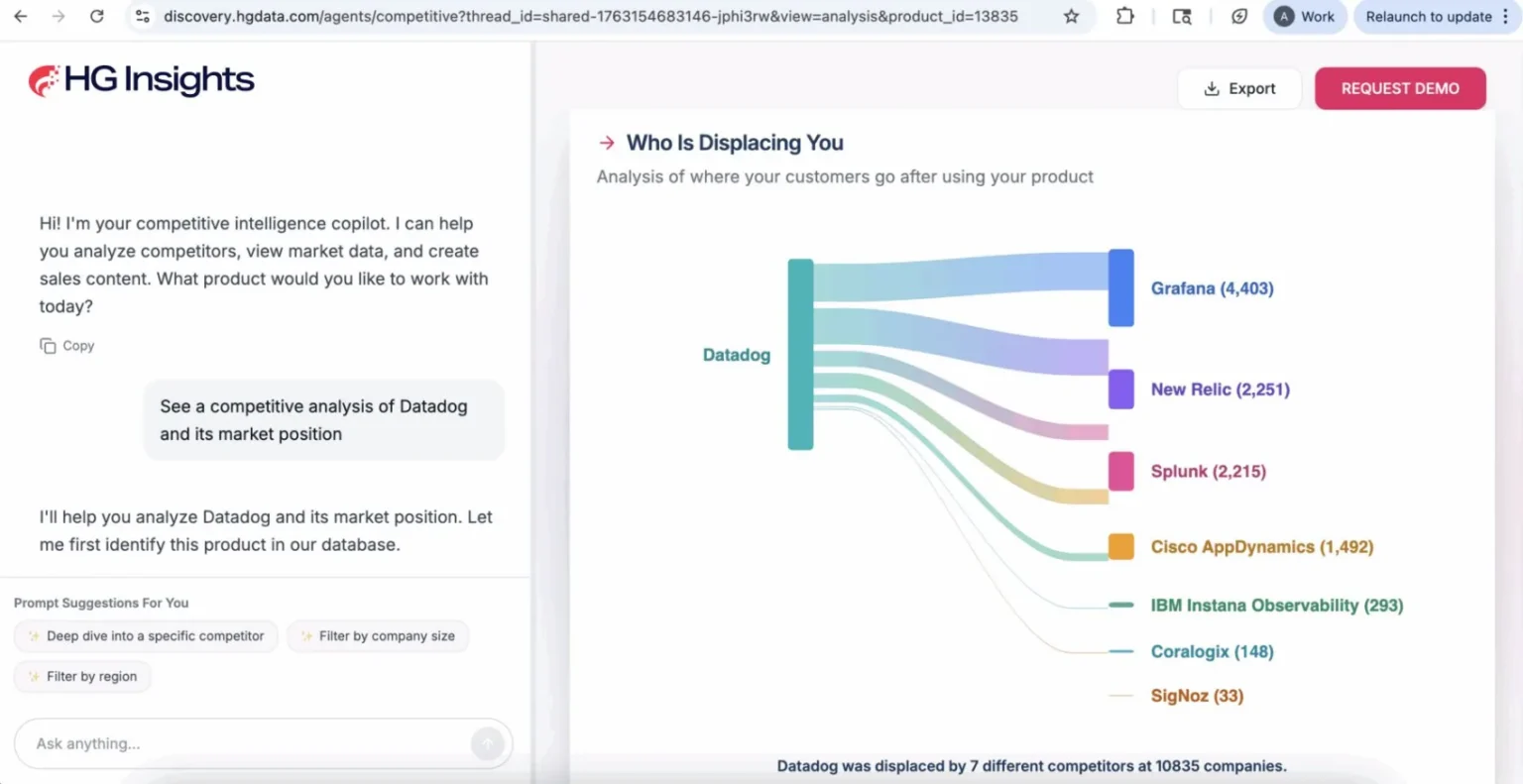
Use customer perspectives on competitor strengths and gaps to build comparison pages, battlecards, and displacement sequences that survive scrutiny. Paired with install data, the same review evidence identifies which accounts run a competitor and are already researching alternatives.
Learn More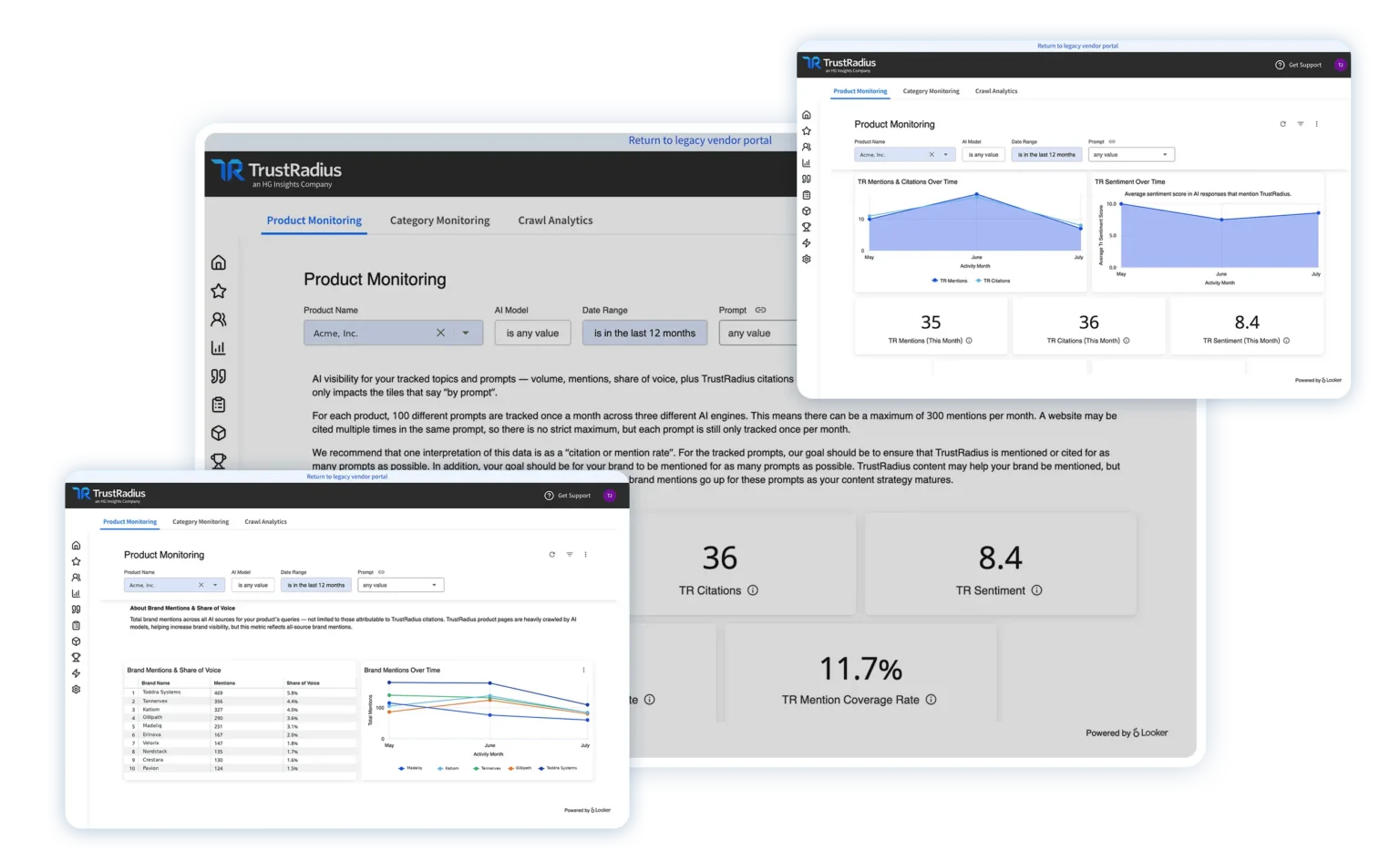
Track which AI engines crawl a vendor's TrustRadius pages, how a product is characterized when buyers ask category questions, and where competitors are cited instead. The outcome is a measurable citation channel rather than an unobserved one.
Learn More
Turn lower-funnel Product Intent into worked pipeline by routing accounts already comparing a product to the sellers who cover them. Category Intent widens the same motion to accounts researching the category before a shortlist exists.
Learn MoreWhich products work with HG Customer Voice?

HG Fabric
HG Fabric resolves reviews and buyer research activity to the same company identities and corporate hierarchies as install, spend, and firmographic intelligence. Running alongside HG Customer Voice, HG Fabric turns a raw buyer signal into an account with a known technology stack.

Buyer Intent
Buyer Intent contextualizes research behavior against what an account already owns, separating expansion, displacement, complementary, and white space designations. Added alongside, Buyer Intent pairs upstream category research with downstream first-party evaluation activity.

Intent-Driven Leads
Intent-Driven Leads delivers opt-in, intent-qualified leads sourced from TrustRadius and filtered by ideal customer profile and sales propensity. Intent-Driven Leads supplies named, contactable people at the accounts that buyer signals surface.

Market Analyzer
Market Analyzer sizes markets, maps white space, and runs competitive analysis over HG install and spend intelligence. Market Analyzer frames review and intent activity, showing whether researching accounts represent a segment worth funding a program against.