
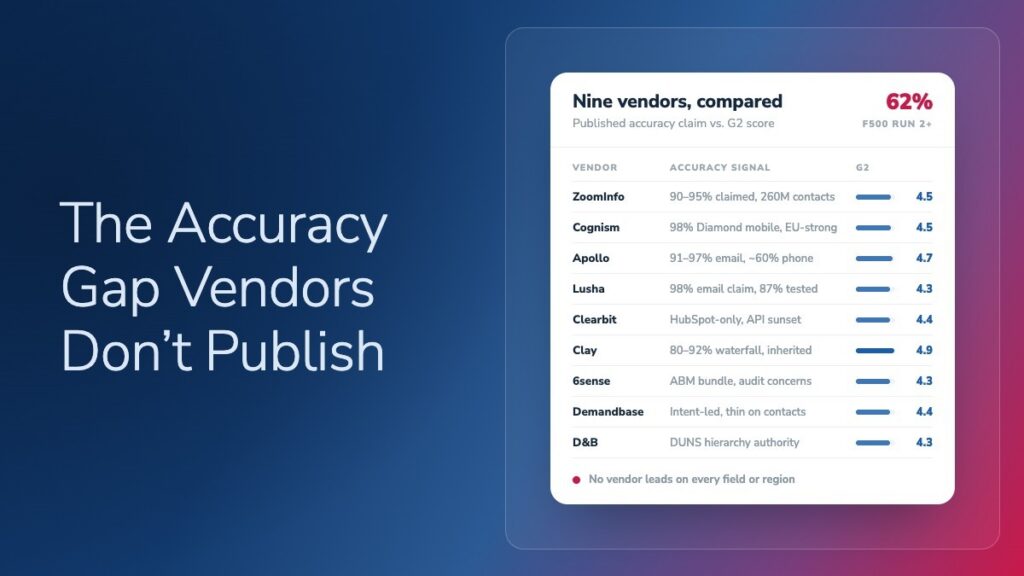
Picking the best B2B data enrichment tools for CRM accuracy means looking past marketing pages and into match rates, because a vendor’s claimed accuracy and its real-world performance on your specific account list are rarely the same number. Enterprise buyers who skip this step end up blocking their own vendor approvals months into a contract. This piece compares how ZoomInfo, Cognism, Apollo, Lusha, Clearbit, Clay, 6sense, Demandbase, and D&B report and defend their accuracy claims, and what to check before any of them touch your CRM.
Quick Answer: No single B2B data enrichment tool wins on accuracy across every field and region. Cognism’s Diamond Data leads on verified EU mobile numbers, Apollo and Lusha post strong email match rates in the 85 to 98 percent range, and Clay’s waterfall model can beat any single vendor on email but only if the underlying providers in the stack are genuinely independent. Test each vendor against your own account list before you buy.
Why data accuracy is the make-or-break metric for B2B GTM teams
Bad CRM data is not a cosmetic problem. It blocks vendor approvals, stalls territory planning, and quietly erodes trust between sales and marketing until nobody believes the pipeline numbers anymore. One enterprise data enrichment buyer HG Insights works with put a real vendor evaluation on hold specifically over employee size inaccuracies and coverage gaps in Asia Pacific, and that is not an isolated story. HG Insights install data shows why consolidation is so hard to pull off: among Fortune 500 companies running any of the platforms compared in this piece, 62 percent run two or more of them at the same time. Gartner’s research on B2B marketing data solutions found that 78 percent of enterprise organizations plan to consolidate their data vendors within 18 months, and accuracy complaints are a leading driver of that churn.
The frustrating part is that the market has normalized inflated accuracy claims. Every vendor markets a number in the 90s. Independent testing rarely confirms it. That gap between the pitch and the delivered match rate is exactly what buyers need to close before signing, and it is the gap this comparison is built around.
How this accuracy comparison was built
This is not a lab test where HG Insights ran identical account lists through nine competitors under controlled conditions. Nobody in this market publishes that kind of study, and any vendor who claims to have tested a rival’s live database usually has not. What follows instead pulls three types of evidence for each provider: the vendor’s own published accuracy claims, aggregate scores and reviewer feedback from both G2 and TrustRadius, and independent guidance on how buyers should verify deliverability before they commit a budget.
That distinction matters. A vendor’s marketing page will tell you what their data is supposed to do. A review aggregate tells you what several hundred to several thousand buyers actually experienced, though those scores measure overall satisfaction rather than a clean accuracy percentage, so treat them as directional. Neither one tells you how a specific tool performs against your specific ICP, which is why the validation section later in this piece is arguably more useful than the comparison table itself.
B2B data enrichment accuracy benchmark: match rate and coverage by provider
Ten providers make up this comparison: ZoomInfo, Cognism, Apollo, Lusha, Clearbit, Clay, 6sense, Demandbase, D&B, and DemandScience. Each section below pairs what the vendor claims with what G2 and TrustRadius reviewers actually report, provider by provider, so the gap between marketing and lived experience is visible rather than averaged away.
ZoomInfo
ZoomInfo markets accuracy in the 90 to 95 percent range. It holds a 4.5-star G2 rating across more than 9,000 reviews, the highest G2 Score (95) in the Sales Intelligence category, and the number-one rank in 142 separate G2 reports. TrustRadius rates it 8.3 out of 10 and Top Rated across nearly 1,900 reviews, with enterprise and mid-market reviewers specifically citing direct-dial and email accuracy for US-focused outbound as a strength. Its real strength is contact volume, with more than 260 million contacts and a large verification team behind them, which is why enterprise accounts often keep ZoomInfo for contacts even after adding a technographic or intent vendor alongside it.
Cognism
Cognism holds a 4.5-star G2 rating across more than 1,300 reviews and an 8.3 out of 10 score on TrustRadius. It built its reputation on Diamond Data, mobile numbers verified by a human research team with a claimed accuracy near 98 percent, a figure that applies specifically to Diamond Data, not the broader database. Independent checks on Cognism’s broader EU mobile coverage land closer to 60 to 75 percent, still ahead of most rivals in that region, while reviewers consistently flag thinner coverage in North America.
Apollo
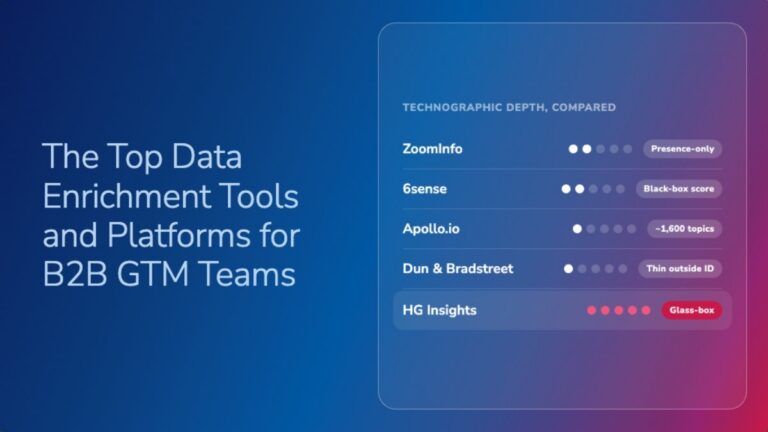
Apollo built its business on 210 million-plus contacts and SMTP-based email verification, reporting 91 to 97 percent email accuracy at a fraction of enterprise pricing. It carries a 4.7-star G2 rating across roughly 9,600 reviews, while TrustRadius rates it 8.5 out of 10 across 624 reviews, where reviewers specifically flag inconsistent data accuracy, completeness, and freshness as a recurring weakness. Phone accuracy is the weak point, running closer to 60 percent, and its technographic data (roughly 1,600 topics via a data partnership) is shallow compared to platforms built around verified installs.
Lusha
Lusha reports 98 percent email accuracy and 86 percent phone accuracy, with confidence scoring shown against every contact so buyers can prioritize high-confidence records first. It holds a 4.3-star G2 rating across more than 1,600 reviews, and TrustRadius rates it 8.5 out of 10 and Top Rated across 329 reviews, where 48 percent of reviewers specifically call out contact data accuracy and reliability as a strength. Independent testing has landed a bit lower in practice, closer to 87 percent valid email addresses after verification, still strong but a reminder that self-reported and independently tested figures rarely match exactly.
Clearbit
Clearbit, now folded into HubSpot as Breeze Intelligence, does real-time website and firmographic enrichment well for HubSpot customers. It carries a 4.4-star G2 rating across roughly 630 reviews and an 8.7 out of 10 score on TrustRadius across 74 reviews, with users on both praising record quality. Its standalone API has been sunset, though, and any team not already on HubSpot is effectively locked out, which alone should rule it out for most enterprise CRM accuracy strategies.
Clay
Clay is not a data source at all. It is an orchestration layer that runs waterfall enrichment across whichever providers you configure underneath it. It holds one of the highest ratings in this comparison on G2, 4.9 out of 5 across roughly 300 reviews, concentrated among technical GTM teams who build and maintain their own workflows. TrustRadius review coverage for Clay’s lead-generation product is too thin to cite reliably. Properly built waterfalls can hit 80 percent-plus email match rates, with some configurations claiming as high as 92 percent, but that number is entirely a function of the providers stacked inside it. Phone number discovery is Clay’s soft spot, typically landing between 40 and 60 percent for direct dials, and accuracy is inherited: three providers licensing the same stale underlying database will not add coverage no matter how the waterfall is configured.
6sense
6sense bundles enrichment into a broader ABM platform rather than competing on raw data depth. It holds a 4.3-star G2 rating across roughly 1,440 reviews and an 8.5 out of 10 score on TrustRadius, where it’s also Top Rated across 514 reviews, though 13 percent of those TrustRadius reviewers specifically cite data accuracy and integrity concerns, including intent signal and contact duplication issues. Some enterprise buyers HG Insights works with describe its scoring methodology as difficult to audit or trust.
Demandbase
Demandbase takes the same ABM-platform approach as 6sense, with the same audit concerns from enterprise buyers HG Insights works with. It carries a 4.4-star G2 rating across nearly 1,950 reviews and sits at roughly 7.8 to 8.1 out of 10 on TrustRadius depending on the listing, with reviewers on both platforms praising intent data and account-level analytics more than raw contact accuracy.
D&B
D&B remains the firmographic and hierarchy authority, built on the DUNS numbering system across hundreds of millions of business records. It holds a 4.3-star G2 rating across more than 1,500 reviews, with users citing report accuracy and timeliness as consistent strengths. TrustRadius has no comparable listing for D&B’s firmographic and enrichment products, only for its separate credit-monitoring line. D&B is the strongest option for resolving corporate parent-child structures, but it offers little in the way of technographic depth, buying intent, or contract timing signals.
DemandScience
DemandScience draws mixed reviews on data quality. It holds a 4.3-star G2 rating across more than 900 reviews and an 8.1 to 8.2 out of 10 score on TrustRadius, with roughly 130 reviews, several Top Rated awards, and audience profiling and targeting as its highest-rated theme. Some buyers report solid lead volume, others flag lower conversion tied back to data freshness. Industry guidance on evaluating DemandScience specifically recommends testing deliverability against a fresh sample rather than trusting a published number, since a mismatch rate above 15 percent on a live sample usually signals a stale underlying database.
What tool offers the best contact data accuracy?
No single vendor leads on every field. Cognism’s Diamond Data reports the highest verified accuracy for mobile numbers, near 98 percent. Apollo and Lusha post the strongest published email match rates among lower-cost providers. Clay can beat any single vendor on email, but only when its waterfall pulls from genuinely independent providers.
The honest test is to run a sample of your own accounts through two or three finalists and compare bounce rates directly, since published figures describe averages across someone else’s customer base, not yours. A tool that wins the industry-wide comparison can still underperform on your specific ICP if your accounts skew toward a region or company size the vendor covers thinly.
Where accuracy breaks down: regional coverage, hierarchy matching, and data freshness
Accuracy is not one number. It splits sharply by geography, entity structure, and how recently a record was refreshed. US match rates across the category typically run 70 to 90 percent. Western Europe lands lower, around 65 to 85 percent, largely because GDPR consent requirements restrict how contact data can be sourced and shared. Asia Pacific is the real gap: match rates there fall to 30 to 40 percent across most providers, driven by fragmented local data sources and inconsistent regulatory access.
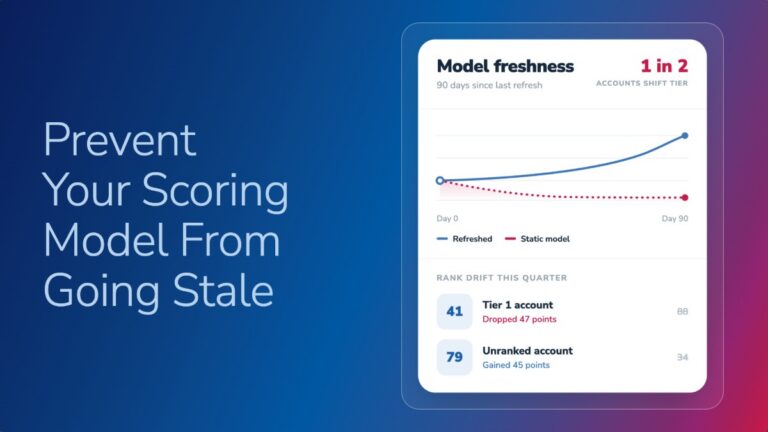
Hierarchy matching, resolving a subsidiary back to its ultimate parent company, is its own failure point separate from raw contact accuracy. A vendor can have a decent match rate at the individual record level and still misfire badly on corporate family trees, which breaks territory assignment and account-based scoring even when the underlying contact data looks fine. D&B’s DUNS system remains the strongest answer here specifically because hierarchy resolution has been its core discipline for decades. Freshness compounds both problems, since a record that was 90 percent accurate six months ago degrades every time someone changes jobs, so any accuracy number a vendor quotes should come with a date attached.
How to validate a vendor’s accuracy claims before you buy
Every vendor in this category claims accuracy in the 90s. The number that actually matters is the bounce rate your team sees on your own list, so the validation step is not optional. Run 150 to 200 of your own accounts, ideally a mix of geographies and company sizes that reflects your real ICP, through each finalist and check deliverability with a neutral third-party email verifier rather than trusting the vendor’s internal confidence scores alone.
Ask specifically how a vendor defines “match”: some count a partial firmographic match as a hit, while others require a fully verified, deliverable contact record. Those are very different bars, and vendors are not always upfront about which one they are quoting. Ask how often records refresh, whether hierarchy resolution is included or a separate module, and whether regional coverage (particularly APAC) has been tested independently or only self-reported. A vendor willing to run a transparent pilot against your actual accounts, with a defined methodology agreed upfront, is telling you more than any accuracy percentage on their homepage.
How HG Insights approaches data accuracy differently
HG Insights does not compete on contact database size the way ZoomInfo or Apollo do, and it does not claim to be the single source for every field in a CRM record. Its position in the enrichment stack is different: 200M+ verified technology installs, 28 billion plus data points, deployment depth, and predictive IT spend intelligence, all delivered through glass-box scoring where a data team can see exactly which inputs drove a given account score. The same verification layer also tracks install dates and estimated contract renewal windows, so accuracy isn’t just about what’s true today, it’s about knowing when an account’s technology relationship is likely to change next. That transparency matters most to the enterprise data leaders who have already been burned by a black-box vendor once and are not willing to operationalize a model they cannot audit.
One HG Insights enterprise customer took its account match rate from the low 40s to the high 80s by working directly with HG’s data team on hierarchy matching, domain anchoring, and country-level reconciliation, the same categories of failure covered above. That kind of collaborative remediation, not just a static accuracy number on a pricing page, is what separates a vendor willing to be measured from one asking you to take its word for it. See how HG Insights supports accurate account and contact enrichment for teams evaluating their next data vendor.
Teams earlier in the evaluation process, still mapping out what “data enrichment” even covers before comparing specific vendors, may want to start with HG Insights’ primer on contact data enrichment platforms before working through this comparison in detail.
Frequently Asked Questions
How do you measure data accuracy in a CRM enrichment tool?
Data accuracy is typically measured as the percentage of enriched records that are both correctly matched to the right company or contact and deliverable in practice, such as a valid, non-bouncing email or a working phone number. Vendors often define “match” differently, so ask whether a quoted number reflects a full verified match or a partial firmographic match before comparing tools.
How can you check the accuracy of a vendor's enrichment data before buying?
Run a sample of 150 to 200 of your own accounts through the vendor’s platform and verify the results with an independent third-party email or phone verification tool rather than trusting the vendor’s self-reported confidence scores. Compare bounce rates and match definitions across finalists using the same sample so the test is apples to apples.
How can AI help validate CRM data accuracy on an ongoing basis?
AI-driven monitoring can flag records that have gone stale by cross-referencing job change signals, company news, and technographic shifts, then trigger automatic re-enrichment before a rep ever works a bad record. This shifts accuracy validation from a one-time pre-purchase check into a continuous process, which matters because contact data degrades every day a company changes jobs or restructures.
Do all B2B data providers report accuracy the same way?
No. Some vendors count any partial firmographic match as a hit, while others only count fully verified, deliverable contact records. This inconsistency is why two providers can both claim “95 percent accuracy” and perform very differently once their data lands in your CRM, which is exactly why independent testing against your own account list matters more than any published figure.