
As a VP of Sales, RevOps leader, or as part of a GTM and commercial planning team, your success depends on knowing when markets are ready to buy. You already define your ideal customer profile, segment by firmographics and industry; yet, some segments accelerate quickly through the funnel while others stall despite strong alignment on paper.
The difference often comes down to technology adoption cycles. By analyzing tech B2B lifecycle data, install history, and renewal patterns, you can identify buyer readiness indicators that signal when a market is entering a true buying window. Instead of guessing at timing, you act on verified technology install signals that reveal when accounts are most likely to upgrade, migrate, or replace existing systems.
Understanding where a segment sits within its adoption curve allows you to time outreach, optimize resource allocation, and align GTM execution with predictive buyer behavior.
What are technology cycles?
Before you can apply lifecycle insight to GTM execution, you need a clear understanding of how technology adoption cycles function in B2B environments.
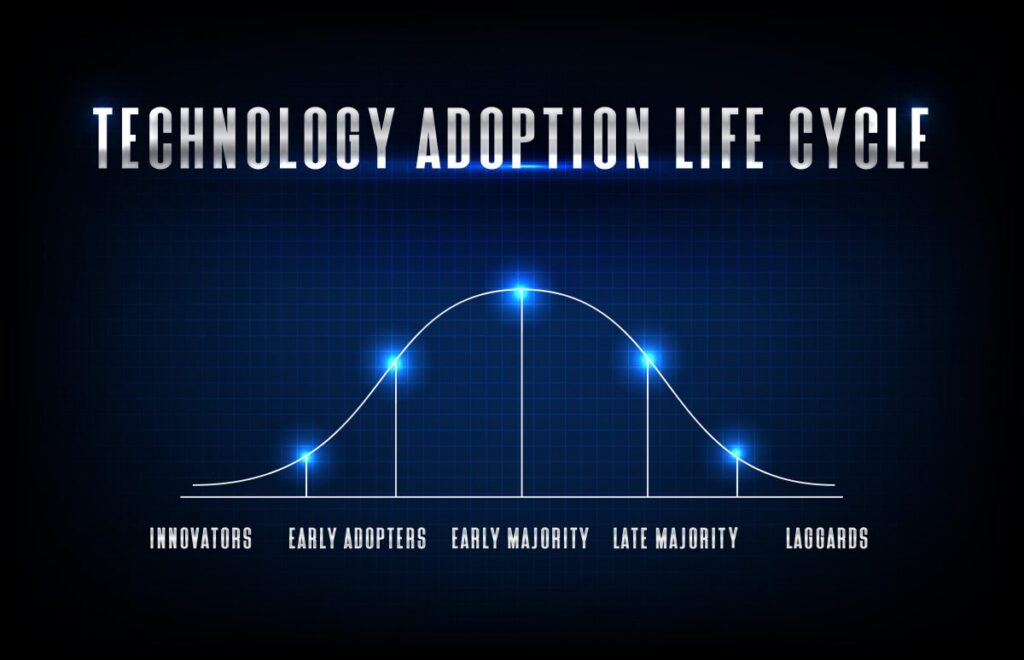
The technology adoption lifecycle typically includes innovators, early adopters, early majority, late majority, and laggards. These stages reflect how quickly a segment embraces new platforms, replaces legacy systems, and invests in innovation.
Understanding the difference between early adopters vs late adopters directly impacts engagement speed, vendor openness, and product fit. Early adopters often experiment with emerging categories and are receptive to differentiated messaging. Late majority segments prioritize stability, governance, and vendor track record.
When you analyze tech lifecycle data across industries or regions, you begin to see patterns in technology replacement timing and tech refresh cycles. Those patterns become powerful buyer readiness indicators that reveal when markets are ready to buy and when they are not.
What tech install & lifestyle data reveal about buyer readiness.
Technology installed signals provide direct visibility into the systems currently deployed within an account. This data includes install age, versioning, deployment scale, and renewal trends.
By leveraging install-based sales intelligence, you can identify aging environments approaching refresh windows, organizations running outdated versions, and segments nearing end-of-life transitions. These signals often precede formal RFP activity and highlight a coming B2B buying window.
Lifecycle segmentation enables you to group accounts by maturity stage. Some may be in early adoption with modernized stacks. Others may be in late-stage environments with high likelihood of replacement. This form of install-based GTM modeling helps you predict upgrade, migration, or competitive displacement behavior.
For Market Intelligence and TAM analysts, tech lifecycle data improves market sizing accuracy. For Revenue Operations leaders, it sharpens prioritization. For Field Sales and Enterprise Account Executives, it clarifies which accounts merit immediate outreach based on ideal customer timing signals.
Technology lifecycle vs. buyer intent: A powerful combination.
Install history explains the environment, and buyer intent explains current research behavior. When combined, they deliver unmatched clarity around predictive B2B buyer behavior.
Buyer intent pinpoints accounts actively researching your product category in real time. Through buyer intent + lifecycle alignment, you gain context that reveals why an account is researching and whether their technology replacement timing supports near-term conversion.
An account exploring your category while running an aging version of a legacy platform signals high buyer readiness. Conversely, an account researching new solutions but recently completing a refresh may represent longer-cycle evaluation.
This alignment transforms technology install signals into actionable insight. You move beyond static ICP filters and instead prioritize based on real-world tech refresh cycles and active buying behavior. For Growth and Demand Generation Directors, this improves campaign efficiency. For Sales Strategy leaders, it ensures coverage aligns with real buying windows.
Use cases: How revenue leaders leverage adoption signals.
Technology adoption cycles inform multiple strategic and operational decisions across GTM organizations. The following use cases demonstrate how lifecycle insight supports measurable outcomes.
A. TAM and market analysis
Accurate TAM sizing requires more than firmographic filters. By incorporating technology adoption lifecycle analysis, organizations can map install penetration and lifecycle maturity to size market opportunity more precisely.
This approach highlights segments in early growth phases while removing oversaturated markets deep in late majority adoption. It also surfaces true whitespace where emerging adoption patterns indicate expansion potential. For Market Intelligence and TAM Analysts, install-based GTM modeling delivers defensible, data-driven market views.
B. Sales Prioritization
Sales prioritization becomes significantly more precise when you incorporate technology install signals. Accounts with aging tech stacks or upcoming refresh windows move higher in your queue.
You can also target early adopters for new product launches or pilot programs, aligning innovation messaging with segments historically open to change. This method strengthens buyer readiness identification and ensures resources focus on accounts with the highest probability of entering a buying window.
C. ABM Campaign Timing
Account-based marketing performs best when timing aligns with lifecycle stage. Install version data and product maturity signals allow you to sequence outreach according to tech refresh cycles.
Early lifecycle accounts respond to thought leadership and category education. Mature accounts approaching replacement timing require migration messaging and risk mitigation proof points. By aligning messaging to technology adoption cycles, you improve engagement and conversion.
D. GTM Strategy and Planning
Lifecycle intelligence informs regional coverage, vertical strategy, and partner alignment. Through strategic planning with install data, you can adjust account distribution based on lifecycle stage readiness.
Regions dominated by early adopters may justify innovation-focused investments. Verticals concentrated in late majority stages may require modernization campaigns or partner-led migration plays. For GTM & Commercial Planning Teams, tech lifecycle data ensures strategy reflects real-world adoption maturity rather than assumptions.
Installing the right message at the right time.
Messaging effectiveness depends on adoption stage alignment. Technology adoption cycles shape how buyers evaluate risk, innovation, and vendor differentiation.
Early adopters respond to forward-looking narratives, technical depth, and competitive advantage. Late adopters and switch-ready buyers require reassurance around governance, stability, and implementation support.
When you align value propositions to lifecycle maturity, you reduce friction and improve engagement quality. This alignment strengthens ideal customer timing signals and ensures your outreach reflects real buyer readiness indicators rather than generic positioning.
Why technographic intelligence is mission critical for timing GTM.
Technographic intelligence transforms raw technology install signals into strategic GTM insight. It allows you to match cadence, messaging, and coverage models to actual lifecycle stages.
By grounding your execution in tech lifecycle data, you prevent GTM misalignment. Territories become balanced based on readiness. Campaigns activate during active tech refresh cycles. Sales prioritization reflects predictive buyer behavior instead of anecdotal assumptions.
HG Insights positions itself as the intelligence layer that unifies technology adoption cycles, install-based GTM modeling, and buyer intent activation into a single framework. This unified intelligence enables you to identify when markets are ready to buy and to execute with confidence.
Connect with the HG Insights team to see how technographic intelligence helps GTM organizations act on install signals and lifecycle insights with precision.I