
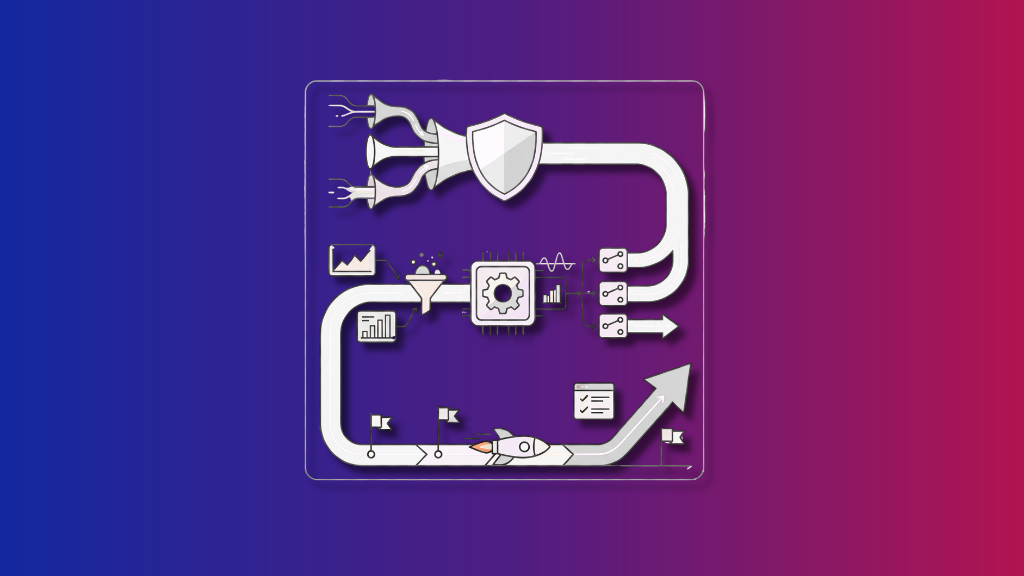
Modern go-to-market execution depends on speed, precision, and alignment across teams. Revenue Operations sits at the center of this effort, aligning people, processes, and data across sales, marketing, and customer-facing teams to provide consistent execution. Without RevOps leadership, GTM motions often fracture, driven by disconnected signals, siloed data sources, and inconsistent workflows that slow growth and reduce efficiency.
GTM fragmentation shows up in many forms:
- Marketing targets those accounts that sales deprioritizes.
- Sales engages buyers without visibility into intent signals.
- Demand generation teams optimize campaigns without feedback from pipeline outcomes.
These disconnects create friction, wasted spend, and missed revenue opportunities.
A strong RevOps strategy transforms unified intelligence into coordinated action. By operationalizing market, account, and buyer insights, RevOps becomes the engine that powers predictable GTM execution and scalable growth.
Play 1 - Build a Shared ICP, Segmentation, & Scoring Framework
Unify Market, Account, & Buyer Intelligence
Effective GTM execution starts with a shared understanding of who to target. RevOps teams must bring together market sizing, technographics, spend insights, firmographics, and buyer intent into a single intelligence framework. When these data sources operate independently, teams define ICPs differently, resulting in inconsistent prioritization and inefficient coverage.
By unifying market, account, and buyer intelligence, RevOps creates a centralized definition of the ideal customer profile and segment membership. This approach supports market sizing, ICP design, and segmentation insights, so that GTM teams focus on accounts with both strategic fit and revenue potential.
Operationalize Scoring For Every GTM Function
Once ICP definitions are unified, RevOps must operationalize scoring across all GTM workflows. Predictive models evaluate fit, engagement, and intent signals to ensure sales, marketing, and demand generation teams prioritize accounts consistently.
Embedding intent-based targeting into scoring frameworks reduces friction during handoffs, improves campaign efficiency, and strengthens predictive account targeting, prioritization, and scoring across teams.
Play 2 - Deploy Signal-Based Prioritization & Routing
Use Buyer Intent & Surge Signals To Guide GTM Teams
Not all accounts are ready to buy at the same time. RevOps teams increase execution efficiency by layering TrustRadius buyer intent with technographic and spend data to identify high-fit, high-interest accounts in real time. These signals reveal when buyers are actively researching solutions or entering evaluation stages.
This signal-based approach enables signal-based account prioritization while strengthening GTM alignment across sales, marketing, and demand generation teams.
Automate Routing To The Right Teams In Real Time
Once priority signals are detected, routing must happen automatically. RevOps teams configure workflows that route leads and accounts to the correct sales reps, ABM programs, or nurture paths without manual intervention.
This automation reduces response time, improves follow-up speed, and supports scalable GTM workflow automation across CRM and MAP systems.
Play 3 - Align Sales & Marketing Around Predictive GTM Motions
Build Plays Around Likely Buying Scenarios
Predictive intelligence allows RevOps teams to move beyond reactive execution. AI models forecast buying windows, product needs, and competitive switching behavior by analyzing historical outcomes, buyer behavior, and intent signals.
These insights enable sales and marketing teams to deploy AI-driven sales guidance and engagement through coordinated plays built around high-probability buying scenarios.
Confirm Both Teams Act On The Same Insights
Alignment only works when teams act on the same intelligence. RevOps establishes a single source of truth that synchronizes campaign timing, account engagement, and ABM execution.
This shared foundation improves sales and marketing orchestration and ensures both teams execute consistently using AI-driven GTM insights.
Play 4 - Create Unified GTM Dashboards For End-to-End Visibility
Bring Pipeline, Territory, & Account Data Into One View
RevOps teams need end-to-end visibility to improve execution. Unified dashboards consolidate pipeline performance, territory coverage, and account-level insights into a single view.
This visibility enables territory and pipeline optimization by revealing whitespace, underpenetrated segments, and coverage imbalances that impact revenue performance.
Use Continuous Feedback Loops To Improve GTM Execution
AI-driven feedback loops refine scoring, targeting, and prioritization models based on real outcomes. As GTM teams act on insights, performance data feeds back into AI models to improve accuracy over time.
This continuous learning enables faster adjustments, stronger forecasts, and higher win rates across GTM motions.
Strengthen GTM Execution With Unified RevOps Intelligence
RevOps delivers the operational rigor required to turn strategy into execution. By unifying market, account, and buyer intelligence, RevOps teams remove friction, improve coordination, and scale GTM execution with confidence.
HG Insights provides the Revenue Growth Intelligence foundation that enables every RevOps play to scale with AI-driven insights, predictive models, and unified workflows.
Frequently Asked Questions
What types of buyer signals should RevOps teams prioritize?
RevOps teams should prioritize verified buyer intent signals such as research activity, comparison behavior, and engagement patterns, especially when combined with technographics and spend data.
How can AI automate account prioritization and routing?
AI applies predictive account scoring and real-time intent analysis to trigger automated routing workflows that assign accounts to the right sales or marketing paths instantly.
What GTM workflows benefit most from a unified ICP framework?
Account targeting, ABM execution, campaign orchestration, territory planning, and pipeline forecasting benefit most from a unified ICP framework.
Can RevOps integrate buyer signals into CRM and MAP systems?
Yes. Buyer intent and predictive insights can be integrated directly into CRM and MAP platforms to support automated scoring, routing, and engagement workflows.